
Walk-In Glass Door Cooler Manufacturer Questions to Ask Before Buying
2026-11-16
Choosing the right walk-in glass door cooler can make or break your business’s daily flow — yet too many buyers skip the hard questions until after the purchase. Before you sign anything, you need a manufacturer who won’t vanish when issues arise. ART has spent years helping owners avoid costly mistakes, and these are the questions we insist you ask first.
How Much of Their Shop Floor Is Dedicated to Glass Door Coolers?
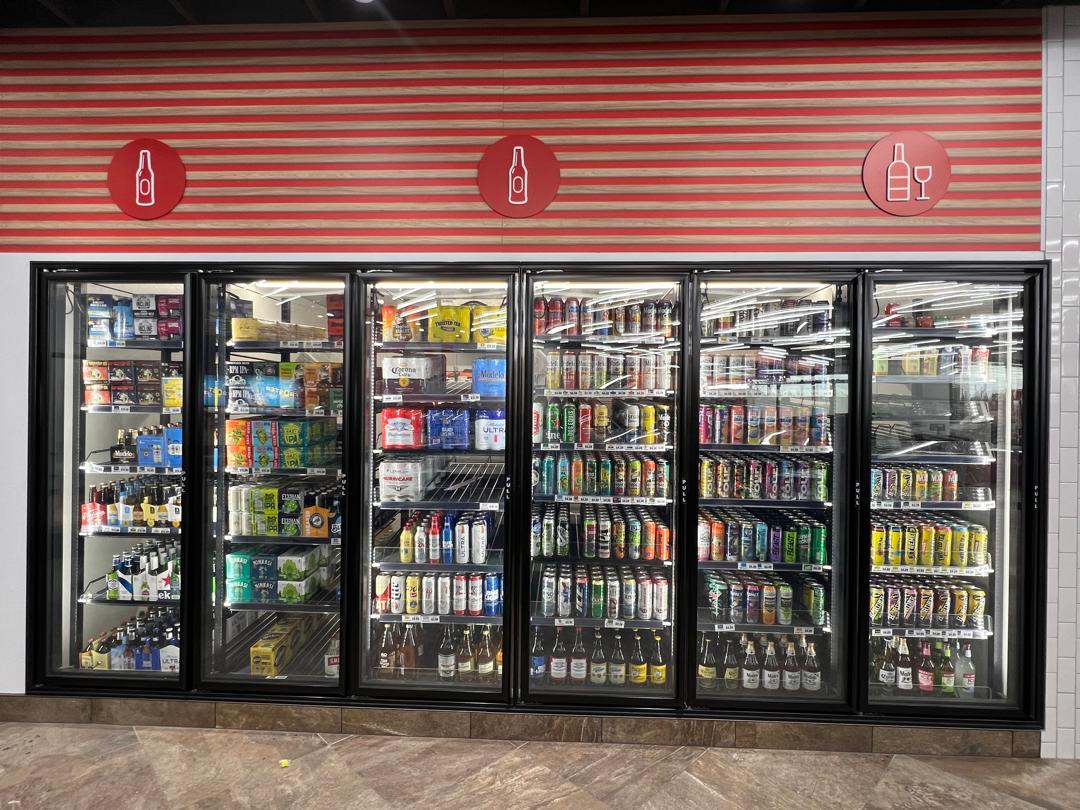
In most convenience stores and small-format grocers, glass door coolers typically occupy between 15% and 30% of the total sales floor. This isn’t a random allocation—it reflects the balance between impulse beverage sales and the need for aisle space. Stores with high foot traffic near offices or gyms often push closer to the 30% mark, banking on chilled drinks as a primary draw. Meanwhile, neighborhood markets with a stronger dry-goods focus may keep coolers under 20% to preserve room for staples.
The placement matters just as much as the square footage. Many owners cluster glass door coolers along the back wall or adjacent to the checkout, forcing customers to walk past higher-margin shelf items. A single 12-foot run of coolers can eat up 100 to 150 square feet once you factor in door swing clearance and service access. Some retailers rotate seasonal stock—loading energy drinks in summer and meal replacements in winter—so the dedicated space stays productive rather than static.
However, a growing number of urban stores are cutting cooler footprints to reclaim floor space for fresh food or pickup zones. Glass door units remain non-negotiable for cold beverages, but the exact share of floor they command often comes down to a simple test: if a cooler door opens less than five times an hour during peak traffic, that spot may be better used for something else.
What Glass and Seal Specs Do They Actually Put in Writing?
Most brands will list the glass as borosilicate and the seal as food-grade silicone, but that only tells you the baseline. You rarely see the actual wall thickness, the Shore hardness of the gasket, or the tolerance range for the lid groove printed anywhere. Those missing numbers matter more than the material name once the cup gets dropped or the seal starts to lose its grip.
What you do get in writing often includes a temperature range for the glass and a note that the seal is removable for cleaning. If a spec sheet omits either one, treat that as a red flag. A seal that can't be pulled out will trap residue, and a glass that only handles warm liquids won't survive real use. Look for specific figures like -20°C to 120°C for the vessel and a silicone ring rated for repeated removal without tearing.
Can You Visit a Current Customer Site to See One Running?
There’s no better way to cut through marketing claims than to see the equipment doing real work at someone else’s facility. Ask the supplier early whether a site visit is possible, and don’t settle for a vague promise. A good vendor keeps a short list of customers who are willing to host visitors, often because they’re proud of the machine’s uptime or the support they’ve received. If the vendor hesitates or says no, treat that as useful information by itself.
When you get there, focus on the details that brochures won’t show. Watch how the operators interact with it, ask about maintenance routines, and listen for complaints they’ve learned to live with. You’ll often hear more honest feedback during a coffee break than in a conference room. Try to visit a site that has been running the equipment for at least a year, so early bugs have already surfaced and been fixed—or not.
What Happens if Your Door Opening Isn't a Standard Size?
Many homes, especially older ones or those with custom framing, have door openings that don't match the typical widths sold at big-box stores. You might measure a rough opening of 31 inches or 35 inches, then realize every pre-hung door you find is either 30 or 32 inches. This isn't a dead end—it just means you'll need to order a custom-sized door or adjust the opening itself.
If the opening is too wide, you can often add framing lumber or drywall to shrink it down to a standard size. This is usually the cheaper route, since standard doors are mass-produced. On the flip side, if the opening is too narrow, widening it may require cutting into studs, rerouting electrical, or even dealing with load-bearing walls. That's a bigger project, but sometimes necessary if you have your heart set on a particular door style.
Custom doors are another option, though they come with longer lead times and higher price tags. Before committing, double-check your measurements at the top, middle, and bottom of the opening—old houses shift over time, and you might find the size varies by half an inch. Whichever path you choose, knowing the exact rough opening dimensions first will save you from returns, delays, and frustration.
How Do They Crate and Ship to Prevent Glass Damage?
Glass crating starts with a custom-built wooden frame that hugs the piece’s exact dimensions—no generic boxes here. Foam padding lines every interior surface, cut slightly larger than the glass so it compresses just enough to hold the pane still without flexing. For large sheets or fragile art glass, a second layer of corrugated plastic or honeycomb cardboard adds shock absorption, while corner protectors made of dense rubber take the brunt of any edge impact.
The real trick is in the void fill. Crates aren’t just stuffed with packing peanuts; professional shippers use expanding foam kits that mold around the glass after the crate is sealed. This creates a solid, vibration-dampening cocoon so the pane can’t shift or rattle during transit. For multi-pane shipments, each piece gets its own foam sleeve and thin wooden divider, with breathable desiccant packs tucked inside to prevent condensation from temperature swings.
On the truck or container, crates are strapped upright—never laid flat—and marked with tilt and shock indicators. Drivers or handlers take routes with fewer hard stops, and the crate design often includes a slight air gap between the outer shell and the glass frame. That gap works like a crumple zone: if a forklift bumps the side, the energy dissipates through the wood before it ever reaches the glass.
What Does the Warranty Actually Cover After Year One?
Once the initial twelve months have passed, the warranty shifts from a broad safety net to a narrow set of promises. Most components that fail due to manufacturing defects are no longer covered. Instead, you are left with a short list of items that typically includes the engine block, transmission casing, and sometimes the differential—but only if the failure is catastrophic and can be traced back to a flaw in the original casting or assembly. Wear-and-tear parts such as brake pads, clutch discs, hoses, and suspension bushings are categorically excluded, no matter how premature their failure may seem.
What often surprises owners is the fine print around “powertrain coverage.” While the term sounds generous, it usually means that only internally lubricated parts are protected. A cracked oil pan, a seized water pump, or a failed turbocharger bearing may not qualify, because the warranty language defines each of those as either an external component or an accessory. Even if the engine block itself is covered, the labor to remove and reinstall it during a repair can be billed back to you, capped only by a hidden hourly allowance buried in the contract.
To avoid an unpleasant surprise after year one, request a written list of exactly which parts remain covered and under what conditions. Pay attention to phrases like “limited to defects in material or workmanship” versus “normal operating wear.” If you plan to keep the vehicle beyond the first year, consider setting aside a repair fund equal to one or two monthly payments—this often proves more valuable than relying on a warranty that, in practice, covers only the rarest and most expensive internal failures.
FAQ
We've been building commercial refrigeration for over twenty years, and glass door walk-in coolers have been a core part of our line for the last decade. You'd be working with a team that has handled everything from small convenience store units to large brewery cold rooms, so we know the particular challenges of keeping glass doors efficient and condensation-free.
Absolutely. We don't take a one-size-fits-all approach. You can choose from hinged or sliding doors, single or double pane glass, and we can adjust the frame dimensions to fit odd wall openings or specific traffic patterns in your space. If you need heated glass to prevent fogging in humid environments, that's something we regularly include.
Our standard panels use polyurethane foam with a thickness of four inches, which gives you a solid R-value and keeps your compressor from working harder than it needs to. For colder applications, we can go thicker. The real benefit is that your energy bills stay predictable, and you aren't constantly fighting temperature swings.
We use magnetic compression gaskets that are tested for constant opening and closing, not just occasional use. In a busy kitchen or retail setting, those seals get abused, so we source them from suppliers that guarantee resistance to tearing and temperature fatigue. We also make them easy to replace without pulling the whole door off.
You get a five-year warranty on the compressor and a two-year parts-and-labor warranty on the rest of the unit, including the glass and door hardware. Beyond that, our service team is available by phone or video call, and we keep common replacement parts in stock so you aren't waiting weeks for a simple fix.
Yes, and we encourage you to actually call them. We can connect you with a regional grocery chain and a couple of independent restaurant owners who run our coolers in high-visibility areas. They'll give you the straight story on installation, noise levels, and how well the doors have held up.
Most standard units ship in four to six weeks, but if you need a fully custom build, plan for eight to ten weeks. Installation usually takes two technicians about a day, assuming your floor is level and you have the right electrical service nearby. We provide a pre-installation checklist so there are no surprises when the crew arrives.
We do, and we'd recommend both for a walk-in that's customer-facing. Low-E glass cuts down on radiant heat gain without making the interior look dark, and our LED strip lighting uses about a third of the power of old fluorescent tubes. You also get a door switch that kills the lights when the door is closed, which adds up over time.
Conclusion
Before committing to a walk-in glass door cooler manufacturer, dig into how much of their production floor is actually set aside for these units. A maker that only builds a handful each month rarely has the jigs, glazing stations, and testing rigs needed for consistent door alignment. Ask them to put glass and seal specifications in writing—tempered or laminated thickness, thermal break details, gasket compression, and condensation resistance. If they hesitate or rely on verbal promises, treat that as a red flag. A shop that is serious about cold storage will also welcome a visit to a current customer site. Seeing a unit that has been running for a year tells you more about hinge wear, frost buildup, and daily door slams than any brochure can.
Pay attention to what happens when your door opening does not match a standard size. Some companies charge steep custom fees or simply refuse; others can adjust frame depth, width, or header height without compromising the seal. Ask how they crate and ship to prevent glass damage—do they use custom foam cradles, edge protectors, and tip indicators, or just a wooden box? Finally, read the warranty language after year one. Many policies cover only the compressor or glass, leaving you to pay for labor, door adjustments, and replacement seals. A manufacturer that stands behind its coolers will state clearly what is covered in years two through five, including parts, glass delamination, and frame corrosion, rather than hiding behind fine print.
Contact Us
Contact Person: Ellen
Email: [email protected]
Tel/WhatsApp: +86-535-2229725
Website: https://www.artrefrigeration.com/