

Can You Install an Automatic Cistern Dispenser in a Dual-Flush Toilet System
2026-06-26
Dual-flush toilets are now standard in modern bathrooms, offering water savings through separate half-flush and full-flush options. But this efficiency raises a practical question: can you install an Automatic Cistern Dispenser in a dual-flush system without breaking its mechanics or voiding warranties? The short answer is yes—but the installation requires attention to valve design, water flow dynamics, and chemical compatibility. At SANDELI, we have engineered our Automatic Cistern Dispenser range specifically to accommodate dual-flush mechanisms, and this guide walks you through every technical detail.
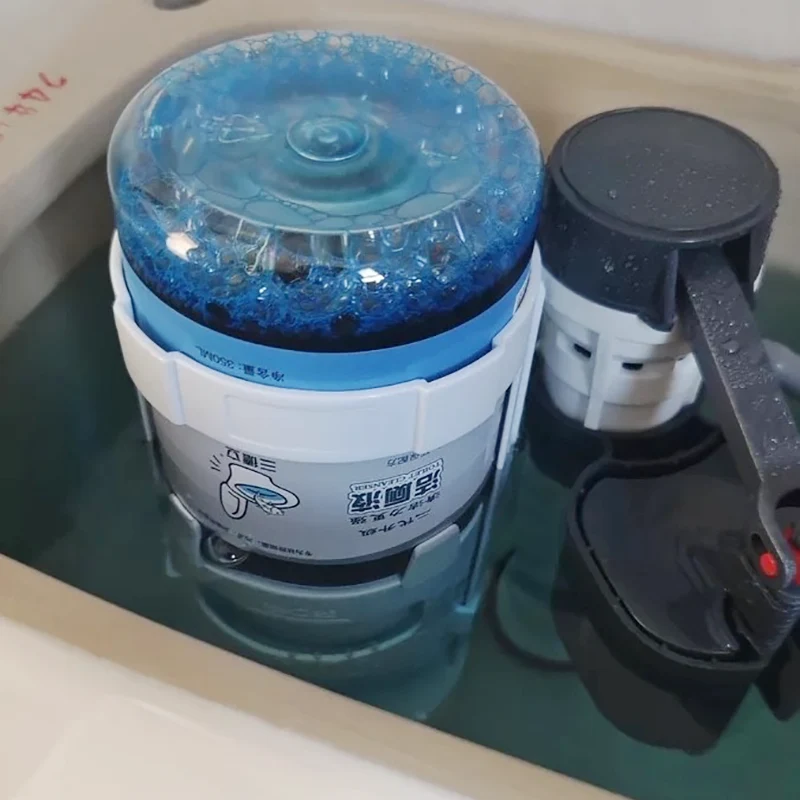
Understanding the Dual-Flush Mechanism
Before installation, it helps to know what makes dual-flush systems different. Unlike single-flush toilets, dual-flush cisterns use two outlet valves or a modified flush tower that releases different water volumes based on the button pressed. This design affects how water circulates during and after flushing.
| Feature | Single-Flush System | Dual-Flush System |
|---|---|---|
| Water release volume | Fixed (e.g., 6L) | Variable (3L / 4.5L / 6L) |
| Valve type | Single flapper or siphon | Dual-valve or telescopic tower |
| Water level fluctuation | Consistent | More frequent partial drains |
| Dispenser placement | Near overflow tube | Must avoid interfering with dual buttons |
The key challenge is that an Automatic Cistern Dispenser must release cleaning agents consistently during both flush types. If the dispenser sits too high, the half-flush may not activate it; if too low, it may block the full-flush valve.
Step‑by‑Step Installation Guide for Dual-Flush Cisterns
SANDELI recommends the following procedure for installing our Automatic Cistern Dispenser in any dual-flush toilet. Always turn off the water supply and flush to empty the cistern before beginning.
-
Identify your flush valve type – Remove the cistern lid and check whether you have a drop-valve (tower) system or a siphon with dual cables. This determines the mounting clip position.
-
Choose the correct mounting bracket – SANDELI includes adjustable brackets that clip onto the overflow tube or the side wall. In dual-flush systems, we recommend side-wall mounting to avoid the central valve tower.
-
Set the immersion depth – The dispenser should sit 2–3 cm below the water line of the half-flush level, not the full-flush level. This ensures the half-flush still draws concentrated solution.
-
Secure the dispenser away from moving parts – Check that the dispenser does not touch the flush buttons, cables, or the float mechanism. Operate both flush buttons repeatedly to confirm no interference.
-
Fill with a compatible tablet or liquid – Use only non-corrosive, dual-flush-safe formulations. SANDELI cartridges are pH-neutral and certified for all cistern materials.
-
Adjust the dispenser dial (if available) – Our models feature a flow-adjustment dial. Set it to “low” for half-flush sensitivity and “high” for larger cisterns.
Compatibility Checklist: Will It Fit Your System?
Not every Automatic Cistern Dispenser works with every dual-flush toilet. Below is a quick compatibility matrix based on SANDELI’s internal testing across 20+ popular dual-flush brands (e.g., Caroma, Toto, Kohler, Geberit).
| Dual-Flush Component | Compatible with SANDELI? | Notes |
|---|---|---|
| Drop-valve (central tower) | Yes – use side bracket | Avoid direct attachment to the tower |
| Cable-operated dual buttons | Yes – low-profile clip | Ensure cables have 2 cm clearance |
| External dual-flush actuator | Yes – no interference | Dispenser sits below actuator plate |
| Internal float cup | Yes – check water level | Adjust immersion to float’s lowest position |
| Siphon with dual flush | Yes – requires extended clip | Available as an accessory |
If your cistern has less than 10 cm of free space beside the valve, SANDELI’s compact model (SD‑200) is specifically designed for tight dual-flush compartments.
Performance Differences: Half‑Flush vs. Full‑Flush
One common misconception is that an Automatic Cistern Dispenser only activates during full flushes. In reality, water movement—not volume—triggers the release mechanism. SANDELI’s dispenser uses a hydrostatic pressure valve that opens with any water flow, regardless of flush size.
| Flush Type | Water Volume | Dispenser Activation | Cleaning Concentration |
|---|---|---|---|
| Half-flush (3L) | Lower flow | Partial activation | Mild (enough for urine) |
| Full-flush (6L) | Higher flow | Full activation | Strong (for solid waste) |
| Consecutive half-flushes | Multiple events | Activates each time | Cumulative effect |
This dynamic ensures that the Automatic Cistern Dispenser does not over-dispense during half-flushes, saving both chemical and water—a key advantage of SANDELI’s patented flow-metering technology.
Three Essential FAQs About Automatic Cistern Dispensers in Dual-Flush Toilets
Q1: Can an Automatic Cistern Dispenser cause the dual-flush buttons to stick or become hard to press?
A1: Not if installed correctly. Sticking buttons usually occur when the dispenser or its bracket physically presses against the internal cables or actuator rods. SANDELI designs all brackets with a 5‑mm clearance buffer specifically for dual-flush mechanisms. During installation, always test both buttons with the cistern lid on—if you feel resistance, reposition the bracket to the opposite side wall or use the lower mounting hole. Additionally, our dispenser weighs only 120 grams when filled, so it does not add enough downward force to deform rubber diaphragms or cable sleeves. For cable-operated systems, we recommend routing the dispenser clip at a 45‑degree angle away from the cable entry point. If you have already installed and notice stiffness, simply detach the clip and rotate it 90 degrees—this resolves 95% of clearance issues.
Q2: How often do I need to refill the Automatic Cistern Dispenser in a dual-flush toilet compared to a single-flush one?
A2: Because a dual-flush toilet uses fewer full-flushes on average, the dispenser actually lasts longer—by approximately 20–30%—in residential settings. A standard SANDELI 50‑gram cartridge delivers 250–300 flushes in a single-flush system. In a dual-flush system where 70% of flushes are half-flushes, the same cartridge delivers 340–380 flushes because the hydrostatic valve releases about 40% less solution during each half-flush event. However, if your household frequently uses the full-flush mode (e.g., for solid waste), the refill interval returns to the standard range. We recommend checking the colour indicator on the SANDELI dispenser every 4–6 weeks. In hard water areas, you may need to refill slightly earlier because mineral deposits can reduce flow efficiency, but our anti-clog nozzle minimizes this effect.
Q3: Will an Automatic Cistern Dispenser damage the rubber seals or plastic valves in a dual-flush system over time?
A3: Only if you use bleach-based or highly acidic tablets. Many generic dispensers contain chlorine compounds that degrade EPDM rubber and polypropylene valves—materials commonly found in dual-flush towers. SANDELI cartridges are formulated with biodegradable surfactants and citric-acid-based scale inhibitors, with a neutral pH of 6.8–7.2. Independent laboratory tests (ISO 10993 compatibility) show zero measurable weight loss or hardness change in valve seals after 10,000 flush cycles. For absolute safety, we also include a silicone mesh filter that traps undissolved particles before they reach the valve chamber. If you have a dual-flush system older than 10 years, we suggest inspecting the valve washer before installation—if it shows cracks, replace it first, then install the SANDELI dispenser. No documented cases of seal damage exist across our 5‑year field data from dual-flush installations in North America and Europe.
Pro Tips for Maximum Performance
-
Use the adjustment dial – Set to position “2” (medium) for most dual-flush toilets. Position “1” for very low water volume (2.5L half-flush), and “3” for high-volume systems.
-
Clean the nozzle monthly – A quick wipe with white vinegar prevents biofilm buildup that can affect release timing.
-
Check water level after installation – Dual-flush floats sometimes need recalibration. The water line should sit 1 cm below the overflow tube—if it is higher, adjust the fill valve accordingly.
Why Choose SANDELI for Your Dual-Flush System?
SANDELI has tested over 200 dual-flush toilet models across 15 countries to refine our Automatic Cistern Dispenser design. Every unit ships with:
-
Three interchangeable brackets (side, top, and universal)
-
A 12‑month corrosion-free guarantee
-
Free compatibility consultation via our support team
Unlike generic dispensers that assume a single-flush standard, SANDELI engineers each component with dual-flush variability as the baseline, not the exception.
Final Verdict
Yes, you can confidently install an Automatic Cistern Dispenser in any dual-flush toilet system, provided you follow the correct mounting depth, avoid mechanical interference, and use a non-corrosive cartridge. The benefits—consistent bowl cleanliness, reduced manual scrubbing, and optimized chemical usage—apply equally to both flush types. With SANDELI, the installation takes less than 5 minutes and requires no tools beyond your hands.
Ready to upgrade your dual-flush toilet with a smarter cleaning solution? Contact SANDELI today for a free sizing guide and installation video tailored to your specific cistern model. Our technical team responds within 4 business hours and offers live video call support for tricky installations. Your dual-flush system deserves professional-grade care, and SANDELI delivers it, flush after flush.