

How Does a Wall Mounted Shower System Redefine Bathroom Performance and Long-Term Value?
2025-12-22
Article Abstract
A wall mounted shower system has become a defining element in contemporary residential and commercial bathrooms due to its space efficiency, hydraulic stability, and adaptability to diverse architectural layouts. This article explains how a wall mounted shower system functions, how to evaluate technical parameters, and how evolving user expectations are shaping future configurations. The content is structured around professional installation logic, material science, water control technology, and lifecycle performance, offering a clear decision-making framework for specifiers, contractors, and end users.
Outline
- Introduction: How a Wall Mounted Shower System Works in Modern Bathrooms
- Core Technical Parameters and System Configuration
- How Installation Logic Impacts Performance and Durability
- How Usage Scenarios Influence System Selection
- Common Questions About Wall Mounted Shower Systems
- How Future Bathroom Trends Are Reshaping Wall Mounted Shower Systems
- Brand Perspective and Contact Information
Table of Contents
- How Does a Wall Mounted Shower System Operate Within a Bathroom Structure?
- How Should Key Parameters Be Evaluated Before Selection?
- How Do Installation and Maintenance Affect Long-Term Performance?
- How Are Wall Mounted Shower Systems Adapting to Future Demand?
How Does a Wall Mounted Shower System Operate Within a Bathroom Structure?
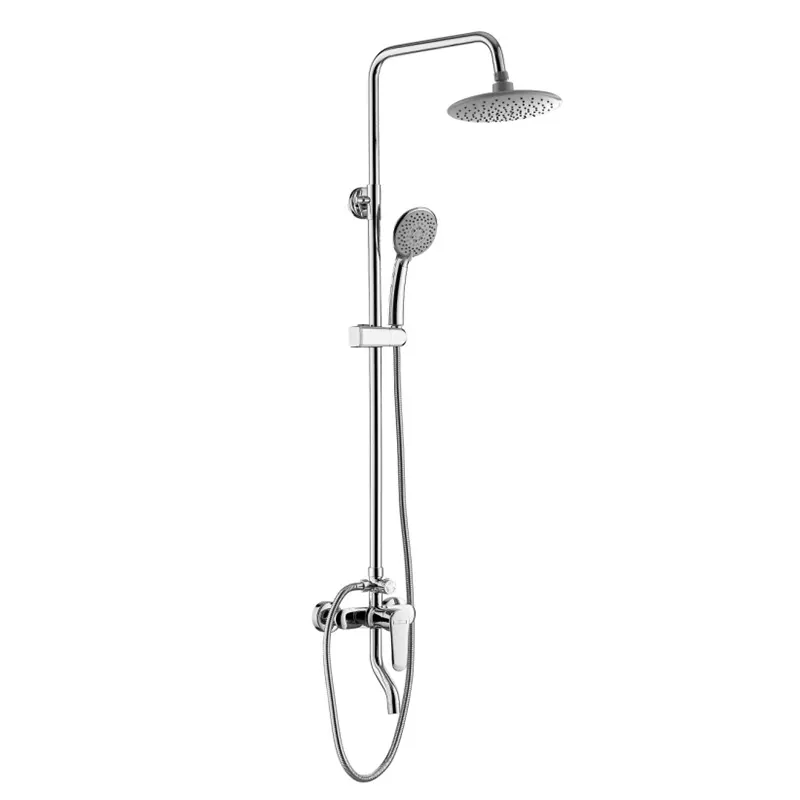
A wall mounted shower system is engineered to integrate water delivery components directly onto a vertical wall surface, connecting to concealed or semi-concealed plumbing lines. Unlike freestanding or ceiling-dominant configurations, this system relies on a balanced interaction between wall reinforcement, water pressure regulation, and ergonomic placement.
At its core, the system distributes mixed water from a control valve to multiple outlets, such as an overhead shower, hand shower, or auxiliary body spray. The wall-mounted architecture simplifies load distribution while maintaining consistent water flow, even in multi-outlet configurations. This design approach supports both residential bathrooms with limited space and hospitality projects requiring standardized installation.
From a structural standpoint, wall mounted shower systems reduce ceiling dependency, making them suitable for renovation projects where overhead pipe modification is restricted. This adaptability explains why wall mounted shower systems are increasingly specified in urban apartments, hotels, and serviced residences.
How Should Key Parameters Be Evaluated Before Selection?
Evaluating a wall mounted shower system requires a technical assessment of materials, hydraulic performance, and dimensional compatibility. These parameters directly influence durability, safety, and user experience.
| Parameter | Technical Description | Professional Evaluation Focus |
|---|---|---|
| Main Body Material | Brass, stainless steel, or alloy construction | Corrosion resistance, pressure tolerance, service life |
| Valve Type | Pressure-balance or thermostatic control | Temperature stability and scald prevention |
| Working Pressure | Typically 0.1–0.5 MPa | Compatibility with local water supply conditions |
| Flow Rate | 6–12 L/min per outlet | Water efficiency and comfort balance |
| Mounting Distance | Adjustable center-to-center spacing | Installation flexibility and retrofit suitability |
| Surface Finish | Chrome, brushed nickel, matte black | Wear resistance and ease of cleaning |
Professionals prioritize pressure compatibility and valve reliability, as these factors determine whether a wall mounted shower system performs consistently across different building heights and occupancy loads. Material selection also affects long-term maintenance cycles, particularly in hard-water regions.
How Do Installation and Maintenance Affect Long-Term Performance?
Installation quality directly influences the operational stability of a wall mounted shower system. Proper alignment ensures uniform stress distribution across mounting brackets, reducing the risk of micro-leakage and wall fatigue.
Concealed piping connections must be pressure-tested prior to final wall closure. This step minimizes future access requirements and protects interior wall structures from moisture damage. In commercial environments, standardized mounting heights are often applied to ensure consistent user experience and compliance with accessibility guidelines.
Maintenance requirements are generally limited to surface cleaning, cartridge inspection, and periodic filter flushing. Systems designed with modular cartridges allow for targeted replacement without dismantling the entire assembly, reducing lifecycle costs.
Common Questions About Wall Mounted Shower Systems
How does a wall mounted shower system maintain stable water temperature?
A thermostatic or pressure-balance valve continuously adjusts hot and cold water input, compensating for pressure fluctuations caused by other fixtures operating simultaneously.
How suitable is a wall mounted shower system for low-pressure environments?
Many configurations are engineered to operate efficiently at low inlet pressure by optimizing internal flow channels and outlet nozzle design.
How long can a professionally installed wall mounted shower system last?
With corrosion-resistant materials and routine maintenance, service life commonly exceeds ten years in residential use and remains reliable under commercial duty cycles.
How Are Wall Mounted Shower Systems Adapting to Future Demand?
Future development of wall mounted shower systems is driven by sustainability standards, user customization, and smart water management. Manufacturers are refining internal flow paths to reduce water consumption without compromising perceived pressure.
Digital temperature control, modular outlet expansion, and adaptive mounting systems are becoming more prevalent. These advancements allow a single wall mounted shower system platform to accommodate evolving user preferences over time, rather than requiring full replacement.
From an architectural perspective, wall mounted configurations align with minimalist bathroom layouts and prefabricated wall panels, supporting faster construction cycles and consistent quality control.
Brand Perspective and Contact Information
Within the global bathroom fixture market, SINKY focuses on delivering wall mounted shower system solutions that balance engineering precision with practical installation requirements. Emphasis is placed on material integrity, valve reliability, and adaptable configurations suitable for diverse regional standards.
For project consultation, technical documentation, or customized wall mounted shower system solutions, interested parties are encouraged to contact the SINKY team for detailed support and specification guidance.