

How Does a Wall Switch Improve Daily Convenience and Energy Efficiency?
2026-09-10
1. What Are the Daily Convenience Benefits of Modern Wall Switch Design?
The wall switch is one of the most frequently touched devices in a home. A person may operate a light switch 20 to 30 times per day. The design of the switch—its size, its tactile feedback, its location—affects the daily experience of every occupant. A standard toggle switch requires a precise finger movement to operate. A rocker switch, which is the standard in modern Home Electricals, can be operated with a light touch, even with an elbow or a shoulder when hands are full. A wide rocker switch with a soft-click mechanism reduces the effort required and provides clear tactile confirmation that the switch has changed state. In our factory, we manufacture wall switches with a 45 mm wide rocker and a travel distance of 3 mm, which is the ergonomic optimum for comfortable operation.
Ergonomic design considerations for wall switches:
• Rocker width: 45 mm (allows operation with any part of the hand)
• Actuation force: 2.5 N (light enough for children and elderly users)
• Travel distance: 3 mm (provides clear tactile feedback)
• Click sound: 45 dB (audible confirmation without being intrusive)
Wenzhou Zhechi Electric Co., Ltd. manufactures Home Electricals that are designed for daily use. Our switches are tested to 100,000 operations, which is equivalent to 10 years of use in a typical household. The contacts are made of silver cadmium oxide, which provides reliable switching even after thousands of operations.
2. How Do Modern Wall Switches Contribute to Energy Efficiency?
The energy efficiency contribution of a wall switch comes from two mechanisms: reducing unnecessary usage and enabling more efficient lighting control. The first mechanism is behavioral. A well-designed switch that is conveniently located encourages occupants to turn off lights when leaving a room. A switch that is difficult to reach or hard to operate may be left in the on position simply because it is easier. The second mechanism is functional. Modern wall switches can include dimming, occupancy sensing, and timer functions that automatically reduce lighting energy consumption. The table below shows the energy saving potential of different switch functions.
| Switch function | Energy saving mechanism | Typical energy saving | Best application |
| Standard on/off | Manual control | Baseline | All rooms |
| Dimmer | Reduces power to the lamp | 15 – 25% | Living rooms, bedrooms |
| Occupancy sensor | Automatically turns off when room is empty | 30 – 50% | Bathrooms, hallways, closets |
| Timer | Automatically turns off after a set period | 20 – 40% | Exterior lights, fans |
| Smart switch (app/voice control) | Allows scheduling and remote off | 10 – 20% | Whole home |
Wenzhou Zhechi Electric Co., Ltd. manufactures Home Electricals with integrated dimming and occupancy sensing functions. Our smart switches are compatible with standard wiring and can be retrofitted into existing wall boxes without additional wiring.
3. What Technical Parameters Should You Verify When Selecting a Wall Switch?
When selecting a wall switch for a residential or light commercial application, there are five technical parameters that determine safety, reliability, and performance. The table below lists these parameters and their recommended values for different applications.
| Parameter | Recommended value | Considerations |
| Rated voltage | 250V AC | Standard for residential electrical systems |
| Rated current | 10A or 16A | 10A for lighting, 16A for mixed loads |
| Contact material | Silver cadmium oxide | Provides long life and reliable switching |
| Mechanical life | 100,000 operations | Equivalent to 10 years of daily use |
| Ingress protection | IP20 (standard), IP44 (bathroom) | IP44 required for wet locations |
| Terminal type | Screw or push-in | Push-in is faster for installation |
| Mounting center | 60 mm or 83.5 mm | Must match existing wall box |
Our factory tests every batch of wall switches for dielectric strength (2,000V AC for 1 minute), contact resistance (less than 50 milliohms), and mechanical endurance (100,000 operations). We also provide a 5-year warranty on all of our Home Electricals products.
4. How Can Wall Switch Placement and Grouping Improve Daily Efficiency?
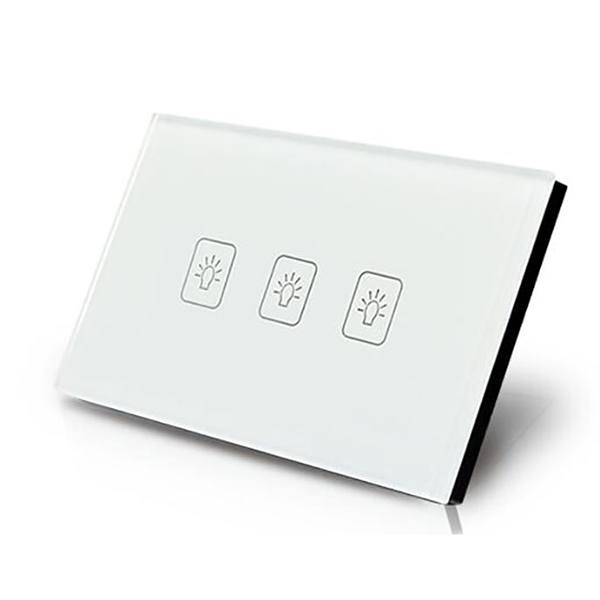
The location and grouping of wall switches is as important as the switch itself. A switch that is placed at the wrong height or in an inconvenient location will not be used consistently. The standard mounting height for a wall switch is 1,200 mm from the finished floor. This height is comfortable for both standing adults and children. For elderly users or wheelchair users, a lower height of 900 to 1,000 mm may be more appropriate. Grouping switches for multiple circuits in a single plate reduces the number of wall boxes required and makes it easier to control all lights in a room from one location. In our factory, we manufacture switch plates in 1-gang, 2-gang, 3-gang, and 4-gang configurations. The plates are available in white, ivory, and stainless steel finishes to match any interior design.
Practical layout tip: Place the switch for the main overhead light on the latch side of the door, at least 100 mm from the door frame. This prevents the door from hitting the switch when it opens. For bathrooms, place the switch outside the door to avoid the risk of electric shock from wet hands.
Frequently Asked Questions About Wall Switches and Energy Efficiency
Summary for Homeowners and Electrical Contractors
The wall switch is a small component with a large impact on daily convenience and energy efficiency. A well-designed switch that is conveniently located and easy to operate encourages occupants to turn off lights when they are not needed. Features such as dimming, occupancy sensing, and timer functions can reduce lighting energy consumption by 15 to 50 percent depending on the application. When selecting a wall switch, verify the technical parameters and choose a product that is appropriate for the load and the environment. Wenzhou Zhechi Electric Co., Ltd. manufactures Home Electricals that are designed for reliability, safety, and daily convenience.
Wenzhou Zhechi Electric Co., Ltd. produces wall switches and other Home Electricals in a range of configurations, finishes, and functions. Our products are tested to international standards and carry a 5-year warranty.