

How Does an Intelligent Toilet Enhance Bathroom Comfort?
2026-09-18
1. What Daily Comfort Problems Does an Intelligent Toilet Solve?
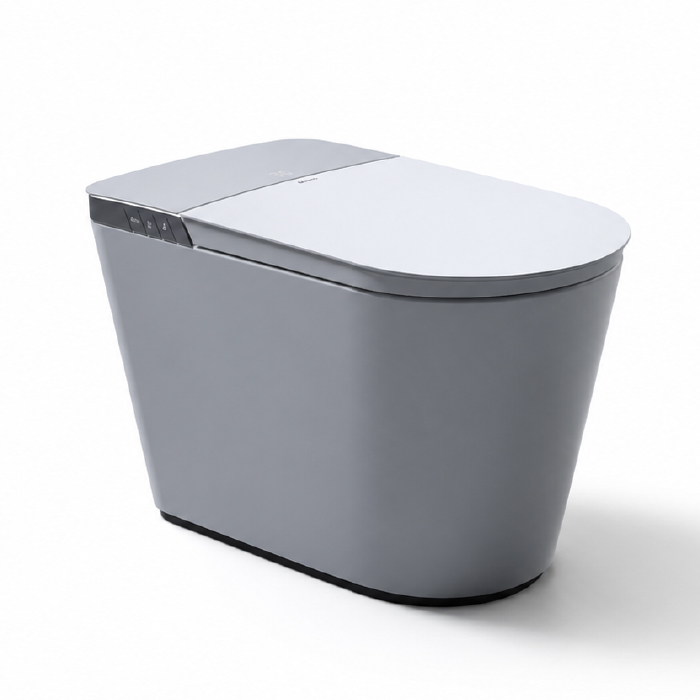
The Intelligent Toilet addresses four specific comfort problems that traditional toilets cannot solve. The first is the cold seat. In unheated bathrooms, the seat temperature can drop below 15°C in winter, which creates an unpleasant shock on contact. A heated seat maintains a constant temperature between 30°C and 40°C, which can be adjusted to personal preference. The second is inadequate cleaning. Toilet paper is effective for some purposes but can be abrasive and does not provide a thorough clean. A bidet wash function uses a directed stream of warm water to clean more effectively and gently. The third is the discomfort of sitting on a hard, unyielding surface. Some intelligent models offer a heated seat with a contoured shape and a soft-close lid that prevents slamming. The fourth is the lack of personalization. An intelligent toilet can remember the preferred settings for different users, including water temperature, water pressure, and nozzle position.
Comfort features that matter most: Based on surveys of intelligent toilet owners, the most valued features are the heated seat, the warm water bidet, and the soft-close lid. Features like automatic flushing and deodorization are appreciated but less critical to daily comfort.
Orans s.r.l has been manufacturing bathroom fixtures for over 25 years. Our factory produces Intelligent Toilet units that incorporate all of these comfort features with a focus on reliability and ease of use. We use ceramic heating elements for the seat and the water, which provide consistent temperature control and long service life.
2. How Does the Bidet Wash Function Improve Hygiene and Comfort?
The bidet wash function is the feature that most distinguishes an Intelligent Toilet from a traditional one. It uses a nozzle to direct a stream of water to the perineal area. The water temperature can be adjusted from 30°C to 40°C, and the pressure can be adjusted from a gentle spray to a more vigorous stream. There are typically three wash modes: posterior wash, feminine wash, and a pulsating massage mode. The posterior wash is the most commonly used. It provides a thorough clean that is more gentle than toilet paper. The feminine wash is designed for women and uses a wider, softer spray. The pulsating mode alternates the water pressure to provide a massaging effect that can help with circulation. The table below compares the cleaning effectiveness of different methods.
| Cleaning method | Cleaning effectiveness | Skin irritation risk | Water consumption per use |
| Toilet paper only | Moderate | Moderate (abrasion) | 0 L |
| Bidet wash (intelligent toilet) | High | Low | 0.3 – 0.5 L |
| Wet wipes | High | Low | 0 L (but disposal issue) |
| Bidet wash + toilet paper | Very high | Low | 0.3 – 0.5 L |
The water consumption of the bidet wash is 0.3 to 0.5 liters per use. This is less than the water used to flush a conventional toilet (6 to 9 liters). In our factory, we design our Intelligent Toilet units to use a small amount of water for the wash function and a separate, efficient flush for the bowl. This dual system reduces total water consumption compared to a conventional toilet with a separate bidet.
3. What Installation and Electrical Requirements Should Homeowners Consider?
Installing an Intelligent Toilet requires more than just connecting a water supply. It requires an electrical outlet near the toilet. The outlet should be a GFCI (ground fault circuit interrupter) type, which is required by code in most jurisdictions for bathroom outlets. The toilet also requires a water supply line with a shutoff valve. The water pressure should be between 0.1 and 0.6 MPa. If the water pressure is too low, the bidet wash function will be weak. If it is too high, a pressure regulator may be needed. The table below summarizes the installation requirements for our standard Intelligent Toilet models.
| Requirement | Specification | Notes |
| Electrical supply | 110V – 240V, 50/60 Hz | GFCI outlet required |
| Power consumption (max) | 1200 W (with heater on) | Dedicated circuit recommended |
| Water supply pressure | 0.1 – 0.6 MPa | Pressure regulator if above 0.6 MPa |
| Water connection | 1/2 inch flexible hose | Shutoff valve required |
| Rough-in dimensions | Standard 12 inch (305 mm) | Confirm before ordering |
| Floor space required | Minimum 700 mm width | For comfortable use |
Orans s.r.l provides a detailed installation guide with every Intelligent Toilet. We also offer a technical support line for installers who have questions about the electrical or plumbing connections. Our factory recommends that the installation be performed by a licensed plumber and electrician to ensure compliance with local codes.
4. How Does an Intelligent Toilet Compare to a Traditional Toilet in Long-Term Value?
The purchase price of an Intelligent Toilet is higher than a traditional toilet. However, the long-term value depends on the features that are used and the savings that are realized. The bidet wash function reduces the consumption of toilet paper. A household that uses two rolls of toilet paper per week can save over 100 rolls per year, which is approximately $50 to $80. The heated seat reduces the need for a bathroom heater in winter, which can save $30 to $50 per year in electricity. The efficient flush system uses less water per flush than an older conventional toilet, saving $20 to $40 per year on the water bill. Over a 10-year period, the total savings can be $1,000 to $1,700, which offsets a significant portion of the initial cost. In our factory, we have conducted life cycle testing on our Intelligent Toilet units and found that the electronic components have a service life of 10 to 15 years with normal use.
Frequently Asked Questions About Intelligent Toilets
Summary for Homeowners and Designers
An Intelligent Toilet enhances bathroom comfort by solving four daily problems: the cold seat, inadequate cleaning, lack of personalization, and the inconvenience of toilet paper. The features that provide the most comfort are the heated seat, the warm water bidet, and the soft-close lid. The installation requires an electrical outlet and a water supply, which should be installed by a licensed professional. The long-term value is realized through reduced toilet paper consumption, lower water usage, and the daily comfort of the users. Orans s.r.l has been manufacturing Intelligent Toilet units for over 15 years and supplies to homeowners and designers worldwide.
Orans s.r.l manufactures Intelligent Toilet units with heated seats, warm water bidets, and efficient flush systems. We provide full technical specifications and installation guides for all of our models.