

How Does an Intelligent Toilet Support Elderly Users?
2026-11-02
An elderly person wakes up at 2 a.m. to use the bathroom. The room is dark. The standard toilet seat is 380 millimeters high, and the person needs to bend the knees and hips to sit down. On the way down, the hand reaches for support that is not there. After use, the person must bend forward and reach behind to clean, then push up from the low seat with the arms. Each of these movements is a fall risk. The Intelligent Toilet addresses these risks through seat height, warm water washing, automatic functions, and night lighting. This guide explains how each function supports elderly users and what to verify before purchasing.
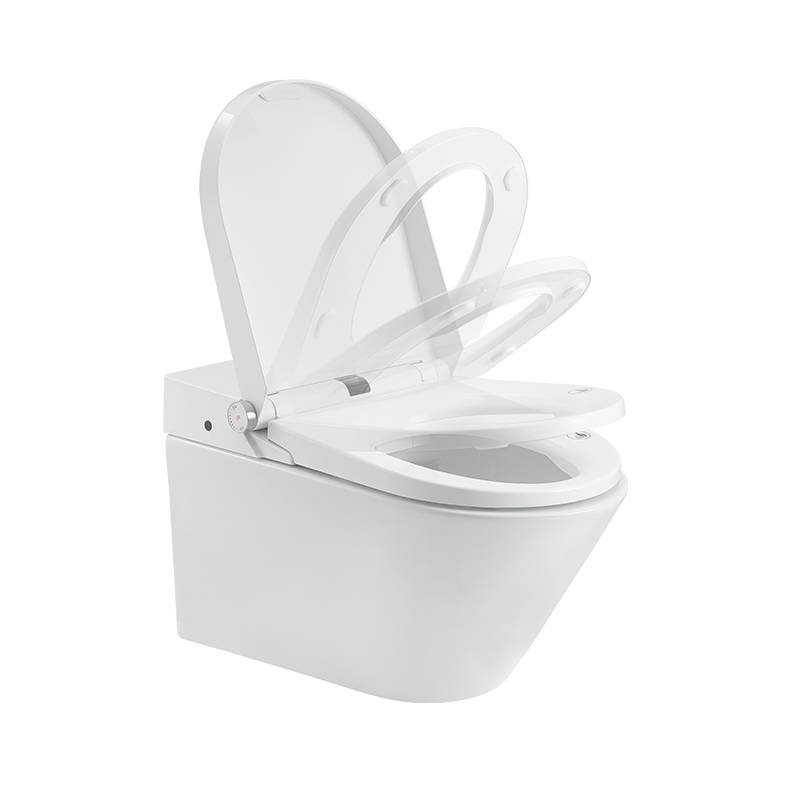
1. Why Do Standard Toilets Become a Daily Difficulty for Elderly Users?
A standard toilet is designed for a young, mobile body. The seat height is typically 380 to 400 millimeters, which requires the user to lower the body through a large range of knee and hip flexion. For a person with knee osteoarthritis or hip replacement, this movement is painful and unstable. The cleaning action requires a forward bend and a reach behind the back, which is difficult for a person with limited shoulder mobility or balance problems. The flush handle is located at the side or the rear, which requires a turn and a reach. The room is often dark at night, and the light switch is at the door, not at the toilet. In our factory, we manufacture Intelligent Toilet units for residential and care facility projects. Orans s.r.l has been manufacturing bathroom fixtures for over 25 years.
The result is that the bathroom is the most common location for falls in the home. The elderly user avoids drinking water in the evening to reduce nighttime trips, which leads to dehydration and urinary tract problems. The standard toilet is therefore not neutral. It actively discourages normal use.
2. Which Functions Directly Reduce the Physical Effort of Daily Use?
The functions that reduce physical effort are the ones that replace a bending, reaching, or twisting movement. The seat heating removes the shock of a cold seat and encourages the user not to delay the visit. The warm water washing replaces the reach behind the back with a button press. The warm air drying removes the need for toilet paper and the associated reach and twist. The automatic lid and the automatic flush remove the need to bend and reach for the handle. The night light removes the need to turn on the main light and to find the switch. The table below shows the function and the physical effort it removes.
| Function | Physical effort removed | Most relevant user group | Note |
| Seat heating | Cold shock; delay avoidance | All elderly users | Temperature range 30 – 40°C |
| Warm water washing | Forward bend and reach behind | Users with shoulder or hip limitation | Water pressure adjustable |
| Warm air drying | Reach for paper; twist | Users with limited dexterity | Drying time 2 – 5 minutes |
| Automatic lid and flush | Bend and reach for handle | Users with back pain | Sensor or remote control |
| Night light | Find switch in the dark | All elderly users | Motion activated, low brightness |
In our factory, we test the water pressure range and the temperature stability of every unit. The water pressure must be adjustable from a gentle spray for sensitive skin to a stronger spray for thorough cleaning. The temperature must be stable within plus or minus 1 degree Celsius to avoid a sudden hot or cold sensation. Orans s.r.l provides the test report with each unit.
3. How Do Seat Height, Seat Shape, and Support Handles Affect Safety?
The seat height is the most important single dimension for elderly safety. A seat height of 430 to 480 millimeters reduces the knee and hip flexion required to sit and stand. The optimal height depends on the user's height and leg length. A rough rule is that the seat height should be equal to the floor-to-knee height of the user. A seat that is too high causes the feet to dangle, which is unstable. A seat that is too low requires a large effort to stand. The seat shape should provide a flat, supportive surface that distributes the pressure across the buttocks and does not concentrate it on the sit bones. A contoured seat may be comfortable for a young user but may be difficult for an elderly user to slide onto. Support handles or a side rail provide a stable grip for sitting and standing. The handles should be mounted at a height that allows the user to grip them without bending. The table below shows the recommended dimensions for different user heights.
| User height | Recommended seat height | Recommended handle height | Seat shape |
| 150 – 160 cm | 430 – 450 mm | 650 – 700 mm | Flat, slightly contoured |
| 160 – 170 cm | 450 – 470 mm | 700 – 750 mm | Flat, slightly contoured |
| 170 – 180 cm | 470 – 480 mm | 750 – 800 mm | Flat, supportive |
| 180 cm and above | 480 mm and above | 800 mm and above | Flat, supportive |
Bathroom safety engineer's note: The seat height must be verified against the user's actual floor-to-knee height, not just the height. A tall person with short legs may need a lower seat than the table suggests. In our factory, we offer seat height risers that can be added to the Intelligent Toilet to increase the seat height by 50 or 100 millimeters. We also offer a range of support handle kits that can be mounted on the floor or on the wall next to the toilet. Orans s.r.l provides the installation drawings for the handle kits.
4. Why Do Remote Control, Voice Prompt, and Emergency Stop Matter More for Elderly Users Than for Others?
The remote control allows the user to operate the functions without turning or reaching. The buttons must be large, with clear labels and a tactile response. The remote should be mounted on a fixed bracket at a height that is easy to reach, or it should be a wireless unit that can be held in the hand. The voice prompt provides feedback for users with reduced vision or unfamiliarity with the functions. The prompt should be clear and not too loud. The emergency stop button should be easy to find and should stop all functions immediately. The table below shows the recommended specifications for these controls.
| Control | Recommended specification | Reason |
| Remote control buttons | Minimum 15 mm diameter, tactile, large labels | Easy to see and press with reduced dexterity |
| Remote mounting height | 700 – 900 mm above floor | Reachable without bending |
| Voice prompt volume | 50 – 60 dB, adjustable | Audible but not startling |
| Emergency stop | Red button, 20 mm diameter, single press | Immediate stop of all functions |
| Power failure flush | Manual button or lever | Toilet usable during power outage |
In our factory, we test the button force and the tactile response on every remote control. The button force should be 1.5 to 3.0 newtons, which is light enough for a person with reduced grip strength but not so light that it is pressed accidentally. We also test the emergency stop response time, which should be less than 0.5 seconds. Orans s.r.l provides the test report with each unit.
5. How Should Families and Care Facilities Specify and Verify an Intelligent Toilet for Elderly Users?
The specification should include eight items. The first is the seat height and the seat shape. The second is the load rating, which should be at least 150 kilograms for a care facility. The third is the water temperature range and stability. The fourth is the water pressure range. The fifth is the remote control type and mounting. The sixth is the emergency stop. The seventh is the power failure flush. The eighth is the electrical supply and grounding. The verification should include five tests. The first is the load test. The second is the water temperature stability test. The third is the remote control response test. The fourth is the emergency stop test. The fifth is the power failure flush test. In our factory, we perform these tests on every unit and provide the test report with the shipment. Orans s.r.l also offers a site assessment service for care facilities.
We recommend that the family or the facility verify the seat height against the actual user before installation. A seat that is comfortable for one user may be too low or too high for another. We also recommend that the installation include a grab bar or a support handle, even if the toilet has a remote control. The handle provides a stable grip for the sit and stand movement, which the remote does not address.
Frequently Asked Questions About Intelligent Toilets for Elderly Users
Summary for Families and Care Facilities
An Intelligent Toilet supports elderly users by reducing the bending, reaching, and twisting movements that create fall risk in the bathroom. The key functions are the seat heating, the warm water washing, the warm air drying, the automatic lid and flush, and the night light. The seat height and the support handles are as important as the electronic functions. The remote control, the voice prompt, and the emergency stop must be designed for reduced vision and dexterity. The specification should include the seat height, the load rating, the water temperature and pressure range, the control type, and the power failure flush. Orans s.r.l has been manufacturing bathroom fixtures for over 25 years and provides full selection and verification support for elderly bathroom projects.