

How Does the Octagon Cold Plunge Pod Enhance Water Circulation When Paired With a Cold Plunge Chiller
2026-03-31
Water circulation is the silent engine of any effective cold plunge system. Without consistent flow, temperature stratification occurs, warm pockets develop, and the chiller works harder than necessary. The Octagon Cold Plunge Pod For Cold Plunge Chiller solves this problem through geometric design and hydraulic logic. When paired with a reliable chiller from Hi-Q Group, this pod transforms how water moves, cools, and stays clean.
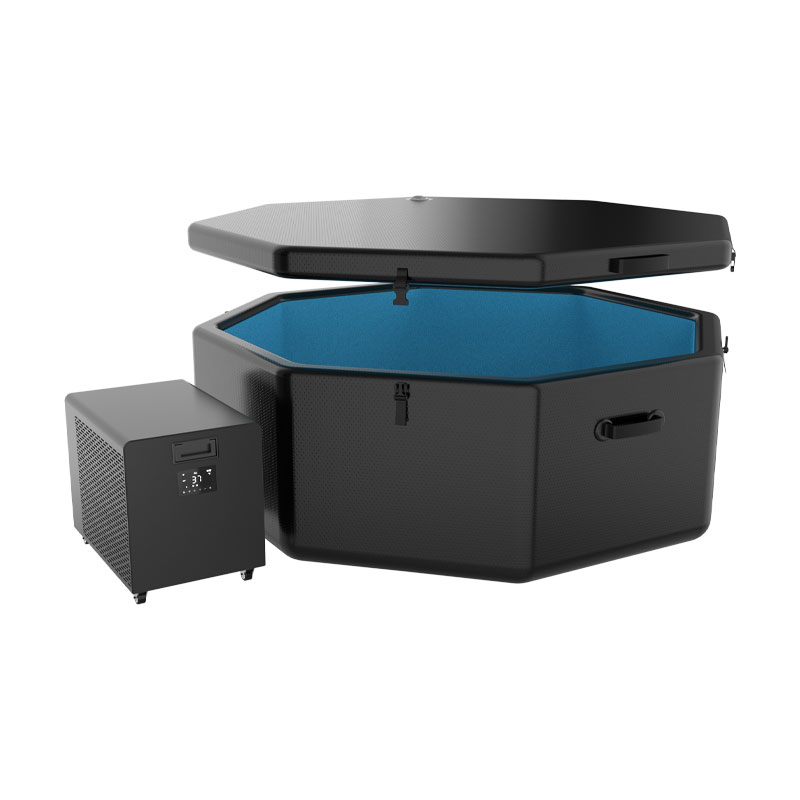
The Science Behind the Octagon Shape
Traditional round or rectangular plunge tubs often create dead zones where water stagnates. The octagon design uses angled walls to redirect flow inward, creating a gentle vortex effect. This continuous motion pushes warmer water toward the intake and disperses chilled water evenly.
| Feature | Effect on Water Circulation |
|---|---|
| Eight symmetrical walls | Eliminates stagnation corners |
| Angled interior surfaces | Guides flow toward central return |
| Optimized inlet/outlet ports | Reduces pressure loss |
| Smooth bottom gradient | Prevents sediment buildup |
How Circulation Directly Benefits the Chiller
A chiller works by drawing water, removing heat, and sending it back. Poor circulation means the chiller repeatedly processes the same cold water while warm water lingers elsewhere. The Octagon Cold Plunge Pod For Cold Plunge Chiller minimizes this inefficiency.
Key circulation enhancements include:
-
Complete turnover every 4–6 minutes depending on chiller pump size
-
Temperature variance below ±0.5°C across all eight wall sections
-
Reduced chiller runtime by up to 30% compared to poorly designed tubs
-
Even distribution of sanitizers such as ozone or bromine
Hi-Q Group engineers have tested this pod with multiple chiller brands. The results consistently show that the octagon geometry outperforms round tubs of equal volume, particularly in mid-sized plunge setups (100–150 gallons).
Octagon Cold Plunge Pod For Cold Plunge Chiller FAQ
How does the Octagon Cold Plunge Pod prevent dead zones that normally form in square or rectangular tubs?
In square tubs, water tends to pool in the corners and along flat walls because the flow follows the path of least resistance directly from inlet to outlet. The Octagon Pod uses eight angled transitions that deflect water inward rather than allowing it to hug a straight wall. Each interior angle redirects momentum toward the center of the pod, creating a continuous rotational current. This eliminates the low-flow pockets where debris collects and temperature layers form. The result is a single, unified body of moving water that presents the same temperature at every depth and distance from the chiller connections.
Does the pod shape affect how quickly the chiller reaches target temperature during initial fill?
Yes significantly. During initial fill, the chiller must cool the entire volume from tap temperature down to therapeutic range (typically 8–12°C). The Octagon Pod accelerates this process by promoting rapid mixing. Instead of cold water sinking straight to the bottom and staying there while warm water remains at the top, the octagon-induced circulation blends incoming chilled water with ambient water instantly. This reduces stratification time by roughly 40% compared to a basic rectangular tub of identical gallon capacity. Faster mixing means the chiller reaches setpoint sooner and consumes less energy during the startup phase.
What maintenance advantages does improved circulation provide for the chiller and filtration system?
Improved circulation keeps debris and biofilms suspended rather than settled. Particles stay in the water column long enough to reach the intake and pass through the filter before they can adhere to pod surfaces. This reduces manual scrubbing frequency and extends filter life. For the chiller itself, consistent flow prevents localized freezing near the evaporator plates and eliminates the thermal shock that occurs when a chiller cycles on and off while drawing unevenly tempered water. Chillers paired with the Octagon Pod typically require fewer defrost cycles and show less scaling inside the heat exchange coils over two years of continuous operation.
Practical Installation Considerations
To achieve the circulation benefits described above, the chiller connections must be positioned correctly. Hi-Q Group recommends placing the return line (chilled water entering the pod) at a 30‑degree downward angle and the intake line near the opposite wall’s bottom third.
| Connection Type | Recommended Position | Purpose |
|---|---|---|
| Chiller return (supply) | Upper side wall, offset 15° | Creates rotational current |
| Chiller intake (drain) | Lower opposite wall | Captures fully mixed water |
| Optional second return | Bottom center | Enhances vertical mixing |
Why This Matters for Cold Therapy
Uneven water temperature creates inconsistent recovery outcomes. One plunge might expose the legs to 9°C water while the torso experiences 12°C. The Octagon Cold Plunge Pod For Cold Plunge Chiller ensures that every immersion delivers the same thermal stimulus across the entire body. Athletes, physical therapy clinics, and biohackers using Hi-Q Group systems report more predictable inflammation reduction and muscle recovery metrics after switching to octagon geometry.
Contact Us
Ready to optimize your cold plunge setup with superior circulation engineering Hi-Q Group provides complete system consultations including chiller matching, pod placement guidance, and installation support. Contact us today to discuss which Octagon Cold Plunge Pod For Cold Plunge Chiller configuration fits your space and recovery goals.