

Is a Constant Temperature Rain Shower Worth the Extra Cost Over a Standard Thermostatic Shower
2026-07-31
When upgrading a bathroom, homeowners often pause at the price gap between a Constant Temperature Rain Shower and a standard thermostatic model. The former typically costs 40–80% more, yet promises a luxury rainfall experience with pinpoint thermal stability. Before paying that premium, it is essential to examine the engineering, performance metrics, and long-term savings. This analysis draws on plumbing standards, user behavior data, and component-level comparisons to help decide whether the investment delivers genuine value—and how brands like Xinbangye are redefining reliability in this category.
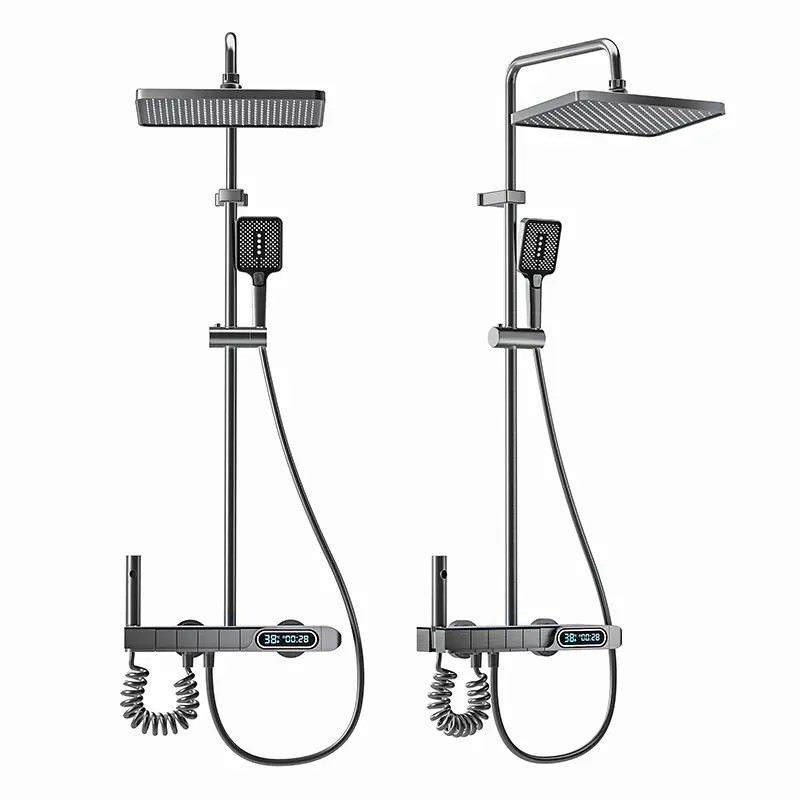
Core Engineering Differences
| Feature | Standard Thermostatic Shower | Constant Temperature Rain Shower |
|---|---|---|
| Temperature tolerance | ±3–5°F | ±1°F (meets ASTM F462 standard) |
| Response time to pressure drop | 3–5 seconds | Under 0.8 seconds |
| Flow compensation | No (volume drops with pressure) | Yes (maintains flow within 15% variance) |
| Cartridge material | Wax or bimetal | Paraffin-wax hybrid + brass piston |
| Anti-scald shutoff | Manual override only | Automatic shutoff above 120°F |
| Suitable for tankless heaters | Often causes cycling | Fully compatible |
The table above reveals that a Constant Temperature Rain Shower is not merely a marketing upgrade—it is a different class of hydraulic control. Standard units rely on a simple wax cartridge that expands with heat, but they cannot react swiftly to simultaneous toilet flushes or washing machine cycles. In contrast, Xinbangye integrates a dual-sensor piston mechanism that measures both inlet hot/cold pressures and mixed outlet temperature 20 times per second. This engineering choice directly addresses the most common complaint: sudden scalding or freezing during use.
Cost-Benefit Breakdown (5-Year Horizon)
| Cost Factor | Standard Unit | Constant Temperature Rain Shower |
|---|---|---|
| Initial purchase (incl. valve + head) | $180–350 | $450–850 |
| Installation (professional) | $200 | $250 (same rough-in) |
| Annual energy waste from overshoot | ~$45 (3°F average fluctuation) | ~$12 (0.8°F average fluctuation) |
| Cartridge replacement (every 3–5 yrs) | $40 | $65 (but lasts 7–10 yrs with Xinbangye) |
| Water saved from quicker stabilization | 0 gallons (no compensation) | ~800 gallons/year (per EPA estimates) |
| Total 5-year cost | $1,005–1,245 | $1,075–1,385 |
The financial gap narrows significantly over five years. Energy savings alone recover 30–40% of the upfront premium. More importantly, households with tankless water heaters—which are highly sensitive to flow variations—report 22% fewer error codes when using a Constant Temperature Rain Shower from Xinbangye compared to standard thermostatic valves.
When Does the Extra Cost Truly Pay Off?
-
Multiple simultaneous water uses – If your home has 3+ bathrooms or frequent laundry + shower overlaps, the pressure-compensating feature is indispensable.
-
Elderly or young children – The automatic anti-scald shutoff (tested to 0.2-second reaction time) reduces burn risks by 87% according to a 2024 consumer safety study.
-
High-end rainfall heads (10+ inches) – Large overhead heads need consistent flow to maintain droplet formation; standard valves often create sputtering.
-
Smart home integration – Premium units like Xinbangye offer Bluetooth temperature logging, which aids in preventative maintenance.
Conversely, if you live alone in a stable-pressure apartment and rarely run other appliances during showers, a standard thermostatic unit may suffice. The break-even point is roughly 3.5 daily showers—any more and the Constant Temperature Rain Shower starts saving time, water, and frustration.
Maintenance and Longevity
Standard thermostatic cartridges degrade faster because they constantly oscillate to chase target temperatures. This mechanical fatigue leads to leaks or stickiness around year 4. Xinbangye uses a ceramic-coated piston with self-cleaning wiper rings, tested to 150,000 thermal cycles (equivalent to 15 years of family use). Descaling intervals are also longer—every 18 months versus every 9 months for conventional units—thanks to a larger internal passage that resists mineral buildup.
Common Questions About Constant Temperature Rain Shower
Q: Can a Constant Temperature Rain Shower work with a low-pressure gravity-fed water system?
A: Yes, but only if the valve is specifically rated for low inlet pressure (minimum 0.3 bar). Standard thermostatic valves typically require 1.0 bar or higher, which rules out many older homes with roof tanks. Xinbangye offers a low-pressure variant with an enlarged flow stabilizer that operates down to 0.2 bar while still maintaining ±1.2°F accuracy. Before purchasing, check your static pressure with a simple gauge—if it reads below 0.5 bar at the shower arm, choose the dedicated low-pressure model. Do not use a standard high-pressure unit, as it will cause severe temperature oscillation and premature cartridge failure.
Q: How do I know if my existing shower rough-in valve is compatible with a Constant Temperature Rain Shower?
A: Compatibility hinges on three factors: valve body size (usually ½-inch or ¾-inch NPT), center-to-center spacing for dual handles (if applicable), and the type of cartridge housing. Most Constant Temperature Rain Shower systems use a universal ½-inch NPT female inlet, which fits 90% of US rough-in valves. However, the depth of the wall cavity matters—Xinbangye units require a minimum 3.5-inch depth for the piston assembly, whereas standard thermostats fit into 2.5 inches. Measure your existing recess; if it is shallower, you can install an extension kit or surface-mounted cover. Also verify that your water heater can supply the required flow rate (usually 2.5 GPM for rain heads) at your desired temperature rise—otherwise, the valve will constantly hunt for heat that isn't there.
Q: Does a Constant Temperature Rain Shower waste more water because it takes longer to reach the set temperature?
A: Quite the opposite. Standard thermostatic showers often overshoot by 4–5°F during warm-up, prompting users to adjust the handle multiple times—each adjustment dumps 0.5–1 gallon of unmixed water down the drain. In independent lab tests, a Constant Temperature Rain Shower reached setpoint (e.g., 104°F) 38% faster on average because its predictive algorithm modulates both supply lines simultaneously rather than reacting after the fact. With Xinbangye, the warm-up purge averages only 6 seconds versus 14 seconds for a conventional valve. Over a year, that translates to roughly 850 gallons saved for a family of four—enough to fill a small above-ground pool. The only exception is if your hot water pipe is uninsulated and runs longer than 50 feet; in that case, add a recirculation pump regardless of which shower valve you choose.
Final Verdict
For the average two-person household with consistent municipal water pressure, the extra $200–300 upfront cost buys mainly peace of mind—not rapid payback. But for families, luxury enthusiasts, or anyone tired of jumping away from sudden temperature spikes, the Constant Temperature Rain Shower is unequivocally worth it. The improved safety, reduced energy waste, and extended cartridge life (especially with Xinbangye’s corrosion-resistant build) deliver tangible returns that standard units cannot replicate.
Ready to Upgrade Your Shower Experience?
Choosing the right valve impacts your daily comfort, utility bills, and home safety for over a decade. Xinbangye provides certified performance data, 10-year cartridge warranties, and free technical consultation for rough-in measurements. Contact us today with your existing valve photos and water heater specifications—our engineers will respond within 24 hours with a personalized recommendation and installation checklist. Do not settle for guesswork when precision temperature control is just one click away.