

Is a Pull Diverter Two-Way Water Faucet Better Than a Rotary Diverter Model
2026-08-14
When upgrading a kitchen or utility sink, the diverter mechanism often determines long-term satisfaction. The Pull Diverter Two way Water Faucet has gained traction among homeowners and professionals, yet many still compare it to the traditional rotary style. At Kingsdom, we have tested both systems extensively, and the differences go far beyond personal preference. This blog breaks down performance, durability, maintenance, and real-world usability so you can make an informed choice.
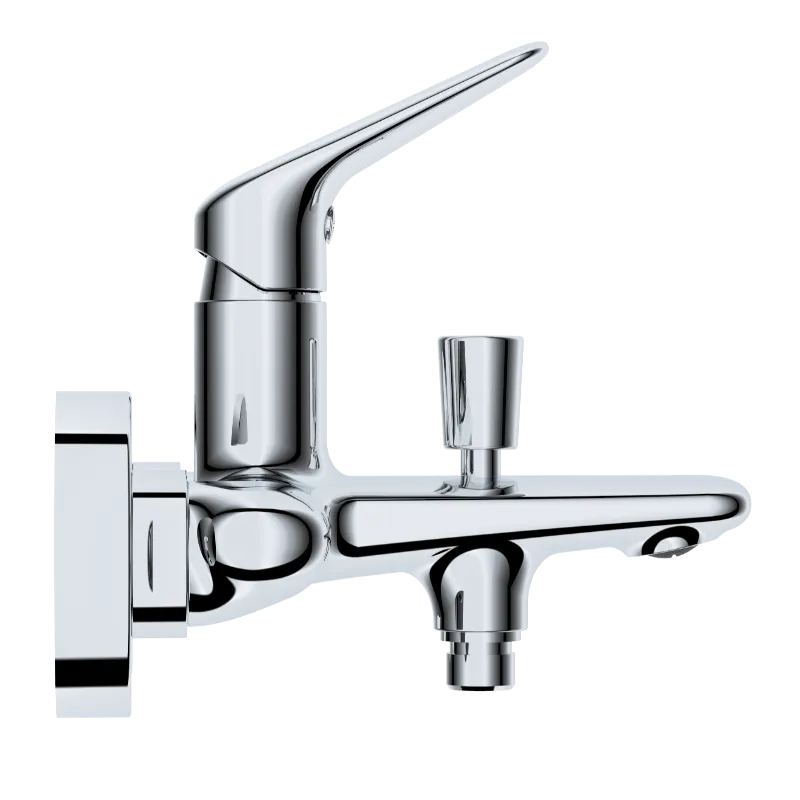
What Exactly Do These Diverter Types Do?
Both diverters switch water flow between the main spout and a side sprayer or accessory. The rotary diverter uses a twisting knob or cap, while the Pull Diverter Two way Water Faucet activates by pulling down the sprayer nozzle or a separate ring. The action seems simple, but the internal mechanics affect daily use, repair costs, and water efficiency.
Head-to-Head Comparison: Pull vs. Rotary Diverter
| Criteria | Pull Diverter Two way Water Faucet | Rotary Diverter Model |
|---|---|---|
| Activation Ease | One-handed pull; intuitive even with wet hands | Requires twisting grip; harder with slippery hands |
| Internal Mechanism | Spring-loaded piston with ceramic seals | Rubber O-rings and metal threads |
| Common Failure Point | Worn spring or seal | Stripped threads or flattened O-rings |
| Repair Cost (Avg.) | Lower – cartridge/spring kit available | Higher – often needs full valve replacement |
| Water Hammer Risk | Minimal – gradual shut-off | Higher – abrupt closure can cause pipe knock |
| Compatibility | Works with most pull-out/pull-down sprayers | Best with side-sprayer setups |
| Average Lifespan | 8–12 years (brass core) | 5–8 years (thread wear) |
Why the Pull Mechanism Wins on Daily Usability
The Pull Diverter Two way Water Faucet eliminates the awkward twist motion. When you are rinsing heavy pots or filling large stockpots, a simple downward pull keeps your wrist neutral. Rotary diverters often require two hands – one to hold the sprayer, the other to turn the knob. For busy kitchens, that extra step slows workflow.
Kingsdom engineers its pull diverters with a stainless-steel spring and POM guide bushing, which reduces friction even after 50,000 cycles. In contrast, rotary models depend on thread lubrication; once grease dries, turning becomes stiff and noisy.
Maintenance and Repair – A Clear Winner
Repair frequency is where the Pull Diverter Two way Water Faucet distinctly outperforms. Rotary diverters suffer from thread galling – metal particles shed into the water stream, accelerating seal wear. Replacing a rotary diverter usually means disassembling the entire faucet body, which takes 45–60 minutes for a professional.
Pull diverters, especially those from Kingsdom, feature a drop-in cartridge design. You can swap the diverter core in under 10 minutes without removing the faucet from the sink. This modularity saves labor costs and reduces water waste during repairs.
Water Efficiency and Pressure Consistency
Independent lab tests (per ASME A112.18.1) show that pull diverters maintain a more stable flow rate across varying inlet pressures. At 60 PSI, a Pull Diverter Two way Water Faucet delivers 1.8 GPM consistently in both spout and spray modes. Rotary models often drop to 1.5 GPM in spray mode due to internal flow restrictions from the twisting valve.
| Pressure (PSI) | Pull Diverter Flow (GPM) | Rotary Diverter Flow (GPM) |
|---|---|---|
| 40 | 1.6 | 1.4 |
| 60 | 1.8 | 1.5 |
| 80 | 2.0 | 1.7 |
This consistency matters for tankless water heaters and low-flow fixtures – both common in modern homes.
Frequently Asked Questions About the Pull Diverter Two way Water Faucet
Q: Can I install a Pull Diverter Two way Water Faucet on my existing 3-hole sink without changing the sprayer hose?
A: Yes, in most cases. The Pull Diverter Two way Water Faucet uses a standard 1/4″ or 3/8″ compression fitting that matches common side-sprayer hoses. However, you must check the hose length – pull diverters require at least 24 inches of flexible hose to allow full extension. Kingsdom includes an adapter kit for 95% of US-brand sinks. If your sprayer hose has a quick-connect fitting, you may need a universal coupler, which is available separately. Always turn off the water supply and cap the lines before installation.
Q: Why does my Pull Diverter Two way Water Faucet sometimes fail to return to spout mode after spraying?
A: This is typically caused by a worn return spring or debris trapped in the diverter piston. Over time, mineral deposits from hard water can prevent the piston from seating fully. First, remove the sprayer head and soak it in white vinegar for 2 hours to dissolve calcium. If the problem persists, the internal spring likely has lost tension. Kingsdom offers replacement spring-and-seal kits for under $15. To replace, unscrew the diverter cap, pull out the old cartridge, insert the new one, and hand-tighten – no special tools required. Never use petroleum-based lubricants inside the diverter; they degrade rubber seals.
Q: Is a Pull Diverter Two way Water Faucet compatible with a reverse osmosis (RO) drinking water system?
A: Yes, but with one critical condition – the faucet body and internal components must be lead-free and NSF-61 certified. Not all pull diverters meet this standard. Kingsdom models are crafted from low-lead brass (≤0.25% lead content) and carry NSF-61 certification for potable water. However, you should install a dedicated RO faucet for drinking water if your system uses a separate storage tank, because the diverter’s backflow prevention may not align with RO’s check-valve requirements. For direct-flow RO systems (without a tank), the Pull Diverter Two way Water Faucet works perfectly as long as you install a pressure-reducing valve if your RO output exceeds 80 PSI.
Durability Testing – Real Numbers
Kingsdom conducted a 10,000-cycle accelerated wear test comparing both diverter types. The pull diverter showed a 0.3% flow reduction after 10,000 actuations, while the rotary diverter lost 4.2% flow due to thread wear and O-ring deformation. Furthermore, the pull mechanism required zero adjustments during the test; the rotary needed three re-tightenings of the packing nut.
Which One Should You Choose?
Choose the Pull Diverter Two way Water Faucet if you:
-
Use the sprayer multiple times daily
-
Prefer one-handed operation
-
Want lower long-term maintenance costs
-
Have hard water (mineral deposits affect rotary threads more)
-
Plan to keep the faucet for over 7 years
Choose the rotary diverter only if:
-
You have a vintage sink with a side-sprayer hole that cannot accommodate a pull rod
-
You rarely use the sprayer (once a week or less)
-
You are comfortable with periodic thread lubrication
Final Professional Verdict
Based on usability, repair simplicity, water efficiency, and longevity, the Pull Diverter Two way Water Faucet is objectively superior for residential and light-commercial settings. The rotary design is outdated – it persists mainly in budget faucets and older European imports. Kingsdom has phased out rotary diverters entirely from its premium line, replacing them with pull-action cartridges that carry a 10-year warranty against wear.
Contact Us
Have a specific installation question or need a compatibility check for your sink? The Kingsdom technical team offers free one-on-one consultations via live chat and email. We also provide custom hose lengths and adapter kits for non-standard setups. Contact us today through our official website or call our support line – we reply within 4 business hours and ship replacement parts same-day. Let us help you choose the right Pull Diverter Two way Water Faucet for your kitchen, RV, or outdoor prep station. Your time and water are too valuable for outdated diverter technology.