

What Are the Advantages of a Wall-Mounted Basin Faucet in Contemporary Design?
2026-09-24
In contemporary bathroom design, the vanity is no longer just a place to wash your hands. It is a visual focal point. The Basin Faucet is the element that draws the eye and defines the style of the space. A deck-mounted faucet sits on the countertop, consuming valuable surface area and creating a cleaning challenge around its base. A wall-mounted faucet moves the fixture off the counter and onto the wall, which frees the entire countertop for other uses and creates a cleaner, more streamlined appearance. This guide explains the design advantages of wall-mounted faucets and the technical requirements that designers need to address during planning.
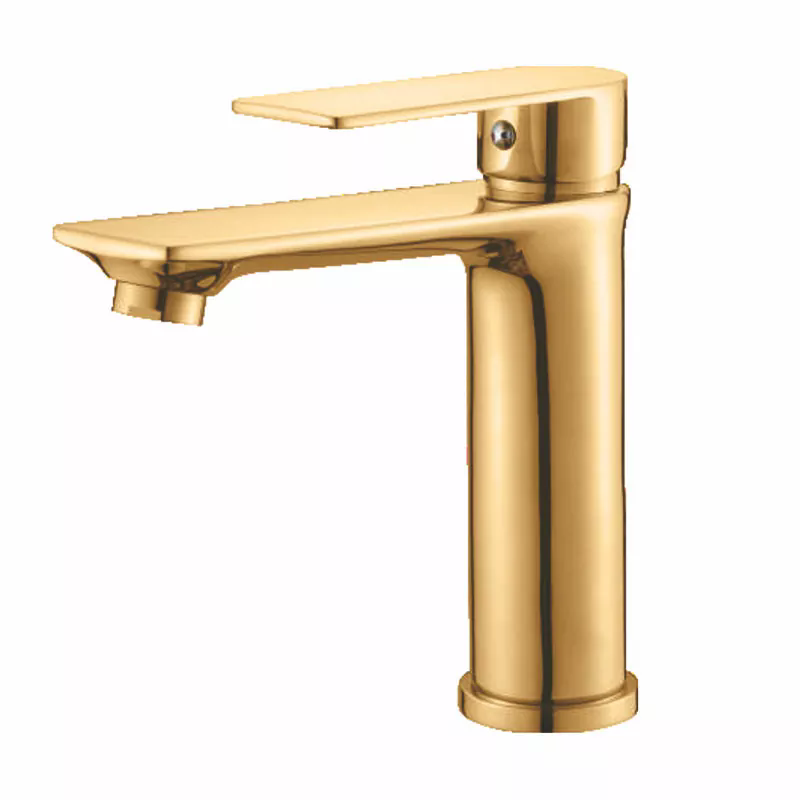
1. How Does a Wall-Mounted Basin Faucet Free Up Countertop Space?
The most immediate advantage of a wall-mounted Basin Faucet is the countertop space it recovers. A deck-mounted faucet typically occupies a footprint of 150 mm by 50 mm at the base, plus the clearance required for the handle and the spout. On a 600 mm wide vanity, this can represent 15 to 20 percent of the usable surface. A wall-mounted faucet eliminates this footprint entirely. The countertop becomes a continuous, uninterrupted surface that can be used for soap dispensers, trays, or decorative objects. For small bathrooms and powder rooms, this space saving is significant. The table below compares the countertop space utilization of deck-mounted and wall-mounted faucets.
| Vanity width | Deck-mounted faucet footprint | Wall-mounted faucet footprint | Countertop space recovered |
| 500 mm | 15,000 mm² | 0 mm² | 15,000 mm² (approx. 30% of surface) |
| 600 mm | 15,000 mm² | 0 mm² | 15,000 mm² (approx. 25% of surface) |
| 800 mm | 15,000 mm² | 0 mm² | 15,000 mm² (approx. 19% of surface) |
| 1000 mm | 15,000 mm² | 0 mm² | 15,000 mm² (approx. 15% of surface) |
In our factory, we manufacture wall-mounted Basin Faucet units that are designed to minimize the wall projection while maintaining a comfortable reach. The spout projection is typically 180 to 220 mm from the wall, which allows the water stream to fall into the center of the basin without splashing.
2. Why Is Cleaning Easier With a Wall-Mounted Basin Faucet?
Cleaning is a major consideration in bathroom design. A deck-mounted faucet creates a ring of sealant or a hard-to-reach gap at its base. Water, soap, and toothpaste accumulate in this gap and are difficult to remove. Over time, the sealant can discolor or develop mold. A wall-mounted Basin Faucet eliminates this gap entirely. The countertop is completely flat, so it can be wiped clean with a single stroke. There is no base to clean around, no sealant to maintain, and no hidden ledge for debris to collect. The table below compares the cleaning time and hygiene of the two mounting types.
| Cleaning task | Deck-mounted faucet | Wall-mounted faucet |
| Daily wipe of countertop | 30 seconds (navigating around base) | 10 seconds (single stroke) |
| Weekly deep clean of base | 2 – 3 minutes (toothbrush required) | 0 minutes (no base) |
| Sealant maintenance | Annual replacement | None |
| Mold risk at base | Moderate to high | None |
Wenzhou Huabaoyuan Sanitary Ware Co., Ltd. manufactures wall-mounted Basin Faucet units with a smooth, easy-to-clean finish. Our factory uses a multi-layer chrome plating that resists water spots and fingerprints, which further reduces cleaning time.
3. What Are the Installation Requirements for a Wall-Mounted Basin Faucet?
Wall-mounted faucets require more planning than deck-mounted models because the water supply lines and the mounting points are inside the wall. The rough-in must be completed before the wall is closed. The two critical dimensions are the center-to-center distance between the hot and cold supply lines (typically 150 mm or 200 mm) and the height of the rough-in from the finished floor or the countertop. The height should be coordinated with the basin. For a vessel basin, the rough-in is typically 250 to 300 mm above the countertop. For an under-mount basin, it is 150 to 200 mm. The table below shows the recommended rough-in dimensions for different basin types.
| Basin type | Recommended rough-in height (above countertop) | Spout projection | Supply line spacing |
| Under-mount | 150 – 200 mm | 180 – 200 mm | 150 mm |
| Vessel (above-counter) | 250 – 300 mm | 200 – 220 mm | 150 mm |
| Wall-hung basin | 200 – 250 mm | 180 – 220 mm | 150 mm |
| Corner basin | 150 – 200 mm | 150 – 180 mm | 100 mm |
In our factory, we provide a rough-in drawing with every wall-mounted Basin Faucet. The drawing shows the required supply line positions, the mounting hole dimensions, and the recommended height. We also offer a rough-in valve that simplifies the installation by combining the hot and cold supply lines into a single unit.
4. How Does a Wall-Mounted Basin Faucet Contribute to the Visual Design?
The visual impact of a wall-mounted Basin Faucet is significant. By removing the fixture from the countertop, the designer creates a cleaner line from the counter to the wall. The eye is drawn to the spout and the handle, which can be specified in a finish that complements the other hardware in the room. The absence of a base on the countertop makes the vanity appear lighter and more floating. This is particularly effective in small bathrooms where visual clutter can make the space feel cramped. Wall-mounted faucets also allow for a wider range of basin shapes, including shallow bowls and sculptural vessels, because the faucet does not compete for space on the counter. Many contemporary designers use wall-mounted faucets as a way to add a sculptural element to the bathroom without occupying valuable horizontal surface.
Frequently Asked Questions About Wall-Mounted Basin Faucets
Summary for Interior Designers and Homeowners
A wall-mounted Basin Faucet offers three advantages in contemporary design: it frees countertop space, it simplifies cleaning, and it contributes to a cleaner visual line. The installation requires more planning because the rough-in must be completed before the wall is closed. The height and projection must be coordinated with the basin type. When these requirements are met, a wall-mounted faucet can transform the appearance and functionality of a bathroom. Wenzhou Huabaoyuan Sanitary Ware Co., Ltd. has been manufacturing Basin Faucet units for over 15 years and provides full technical support for wall-mounted installations.
Wenzhou Huabaoyuan Sanitary Ware Co., Ltd. manufactures wall-mounted Basin Faucet units with chrome, brushed nickel, and PVD finishes. We provide rough-in drawings, installation guides, and technical support for designers and plumbers.