

What Are the Common Failure Modes of a U-Shaped Bend Pipe in High-Temperature Service
2026-07-03
In high-temperature industrial piping systems, the U-Shaped Bend Pipe is a critical component used to absorb thermal expansion, accommodate space constraints, and redirect flow. However, when exposed to sustained elevated temperatures—typically above 400°C in power plants, refineries, and chemical facilities—these bends become susceptible to distinct failure mechanisms. Understanding these failure modes is essential for engineers and maintenance teams. At XIN GE LING, we have spent over two decades analyzing, testing, and supplying high-performance U-Shaped Bend Pipe solutions that mitigate these risks through superior metallurgy and precision forming.
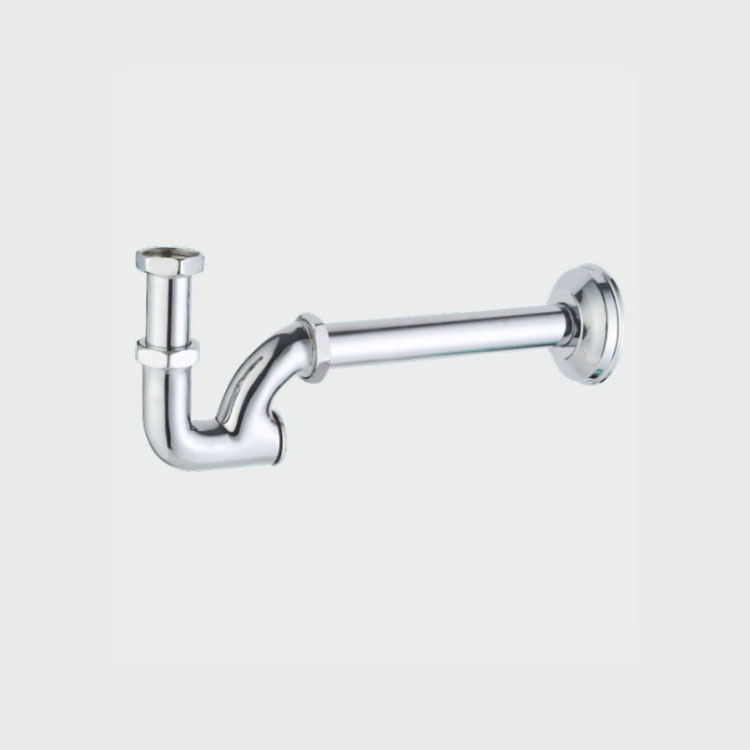
Primary Failure Modes of U-Shaped Bend Pipe at Elevated Temperatures
Based on operational data and metallurgical investigations, the following five failure modes account for over 85% of premature replacements in high-temperature service. Each mode is influenced by the bend’s unique geometry—specifically the extrados (outer curve) and intrados (inner curve), which experience asymmetrical stress and strain.
| Failure Mode | Primary Cause | Typical Location | Critical Temperature Threshold |
|---|---|---|---|
| Creep Rupture | Sustained stress at >0.4 Tm (melting point) | Extrados (outer wall) | >450°C for carbon steel; >600°C for SS |
| Thermal Fatigue Cracking | Cyclical temperature swings + restraint | Intrados (inner curve) | ΔT > 150°C per cycle |
| Wall Thinning / Erosion | High-velocity particle-laden flow | Intrados downstream side | >400°C with solid entrainment |
| Graphitization | Microstructural carbon transformation | Heat-affected zone (HAZ) | >425°C for carbon-moly steels |
| Oxidation / Scaling | Continuous oxygen exposure at high temp | Entire outer surface | >550°C without protective coating |
Detailed Analysis of Each Failure Mechanism
1. Creep Rupture
At high temperatures, the U-Shaped Bend Pipe experiences sustained hoop stress from internal pressure. The outer radius (extrados) undergoes additional tensile bending stress, accelerating creep deformation. Over time, grain boundary cavitation leads to micro-voids that coalesce into macroscopic cracks. XIN GE LING recommends using creep-resistant alloys (e.g., P91, Incoloy 800H) and performing regular creep strain monitoring via high-temperature extensometry.
2. Thermal Fatigue Cracking
During startup and shutdown cycles, the U-Shaped Bend Pipe expands and contracts. However, the bend’s geometry creates constraint from adjacent piping, inducing alternating plastic strain. Cracks typically initiate at the intrados where compressive residual stresses from cold bending combine with tensile thermal stresses. Our XIN GE LING engineering team advocates for controlled bending processes with post-weld heat treatment (PWHT) to reduce residual stress levels below 30% of yield strength.
3. Wall Thinning from Erosion-Corrosion
In high-temperature services with steam or hydrocarbon flow containing particulates, the change in flow direction within the U-Shaped Bend Pipe causes particle impingement on the inner curve. This phenomenon is exacerbated by lower viscosity at elevated temperatures. Regular ultrasonic thickness (UT) scanning at 12-point intervals around the bend is a standard practice recommended by XIN GE LING.
4. Microstructural Degradation (Graphitization and Spheroidization)
For carbon steel and low-alloy grades, prolonged exposure above 425°C converts pearlitic carbide into free graphite, reducing tensile strength and ductility. This is particularly dangerous because the U-Shaped Bend Pipe may fail without significant deformation—a brittle rupture. XIN GE LING strictly enforces material certification and positive material identification (PMI) to avoid off-spec heats.
5. High-Temperature Oxidation
Unprotected U-Shaped Bend Pipe surfaces develop oxide scales that spall during thermal cycling, leading to progressive wall loss. In critical applications, XIN GE LING supplies aluminized or chromized diffusion coatings that extend oxidation life by 300–500%.
Best Practices for Failure Prevention
| Preventive Measure | Frequency | Responsible Role |
|---|---|---|
| In-situ creep strain measurement | Quarterly | NDT Engineer |
| Oxide scale thickness inspection | Every 6 months | Inspection Team |
| Finite element thermal-stress analysis | During design phase | Piping Designer |
| Replacement of graphitized bends | At 80% of design creep life | Maintenance Planner |
U-Shaped Bend Pipe FAQ – Common Questions from Industry Professionals
Q1: How can I distinguish between creep rupture and thermal fatigue cracking in a failed U-Shaped Bend Pipe?
A: Creep rupture typically presents as intergranular cavities with substantial wall thickening near the fracture zone, accompanied by significant overall diametral growth (typically >2%). The fracture surface shows dimpled, elongated grains under SEM. Thermal fatigue, conversely, displays transgranular, branched cracks with little to no wall thickening, and the fracture surface appears flat with striations. In practice, XIN GE LING recommends sending a 50mm coupon from the extrados for metallographic examination—this provides unambiguous differentiation. Additionally, creep failures are time-dependent (occur after thousands of hours), while fatigue failures correlate with the number of thermal cycles, not total operating hours.
Q2: What is the maximum allowable operating temperature for a carbon steel U-Shaped Bend Pipe without losing structural integrity?
A: For ASTM A106 Grade B carbon steel, the ASME B31.3 code limits sustained operation to 425°C (800°F) for pressure-containing applications. However, XIN GE LING advises that even at 400°C, the creep rupture strength drops to approximately 60% of room-temperature values. If your service exceeds 400°C continuously, we strongly recommend upgrading to ASTM A335 P11 (1.25Cr-0.5Mo) which permits operation up to 540°C, or P91 (9Cr-1Mo-V) for up to 620°C. Always factor in the minimum required thickness from the design pressure and add a corrosion/erosion allowance of at least 1.5mm for every 10 years of intended service life.
Q3: How often should I perform non-destructive testing (NDT) on a U-Shaped Bend Pipe operating at 520°C in a refinery hydrogen reformer?
A: Based on API 570 and XIN GE LING’s field experience, we recommend a three-tiered schedule: (1) Visual and dye-penetrant inspection of the intrados and extrados every 3 months during plant outages; (2) Ultrasonic thickness mapping (minimum 15 grid points) every 6 months to track wall loss trends; (3) Replication or portable hardness testing every 12 months to detect microstructural changes. If the hydrogen partial pressure exceeds 0.7 MPa, add an in-situ metallographic replication every 6 months to check for hydrogen attack—this is non-negotiable. A risk-based inspection (RBI) approach can adjust these intervals if the bend has a proven track record of >5 years without any degradation.
Conclusion
The U-Shaped Bend Pipe is not merely a passive flow redirector—it is a thermally and mechanically active component that demands rigorous material selection, precise forming, and systematic inspection. From creep rupture to oxidation, each failure mode has identifiable precursors that can be detected early with appropriate NDT protocols. XIN GE LING manufactures each U-Shaped Bend Pipe with full traceability, from melt chemistry to final hydrostatic testing, ensuring compliance with ASME, EN, and JIS standards. Our in-house finite element analysis (FEA) and proprietary cold-push forming technology produce bends with uniform wall thickness and minimal residual stress—directly addressing the five failure modes discussed above.
Contact us today at XIN GE LING for a comprehensive technical review of your high-temperature piping requirements. Our team of metallurgists and piping engineers will provide customized material recommendations, stress analysis reports, and a detailed inspection plan tailored to your operating conditions.