

What is the Difference Between a Mechanical Push Bathroom Time Delay Water Tap and an Infrared Sensor Model
2026-06-04
When selecting a Bathroom Time Delay Water Tap for commercial or residential use, two dominant technologies emerge: mechanical push models and infrared sensor models. SINKY offers both configurations, but understanding their operational, maintenance, and hygiene differences is essential for choosing the right fixture.
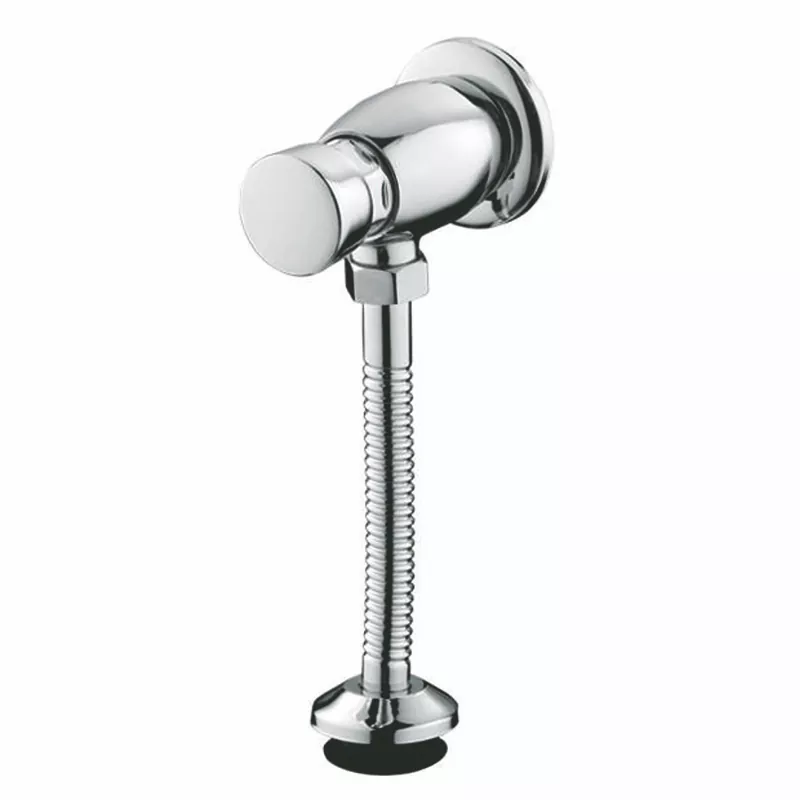
Core Mechanism Comparison
A mechanical push Bathroom Time Delay Water Tap relies on a physical spring-loaded valve. Pressing the button opens the valve; water flows for a preset duration (typically 5–30 seconds) before a spring closes it. Conversely, an infrared sensor model uses an electronic eye that detects hand presence, triggering a solenoid valve to open. Water stops when the sensor no longer detects motion, plus a short delay.
Key Differences at a Glance
| Feature | Mechanical Push | Infrared Sensor |
|---|---|---|
| Power Source | None (fully mechanical) | Batteries or AC adapter |
| Hygiene | Touch required (single point) | Touchless (hands-free) |
| Durability | Spring wear over time | Sensor lens contamination risk |
| Flow Duration | Fixed pre-set time | Variable based on presence |
| Maintenance Cost | Low, occasional spring swap | Higher, sensor calibration/battery |
Practical Performance Insights
SINKY engineering data shows that mechanical models excel in high-traffic public restrooms where power access is unreliable. They fail-safe to closed position even after thousands of cycles. Infrared models shine in healthcare or food preparation areas where no-touch operation reduces cross-contamination. However, reflective surfaces or dark skin tones can occasionally challenge basic infrared sensors—premium SINKY sensor taps use multi-beam technology to mitigate this.
Bathroom Time Delay Water Tap FAQ Common Questions
Q: How long does a mechanical push Bathroom Time Delay Water Tap typically run per press?
A: Standard SINKY mechanical delay taps provide 8 to 12 seconds of water flow per push. Extended-cycle versions for handwashing stations offer up to 25 seconds. The duration is factory-set via internal flow restrictor geometry and cannot be user-adjusted on most mechanical models. To change delay time, swap the internal cartridge with a SINKY alternative specified for shorter (5s) or longer (20s) operation.
Q: Can an infrared sensor Bathroom Time Delay Water Tap work if the power fails?
A: No, infrared sensor taps require power to open the solenoid valve. SINKY sensor models include a battery backup option (4x AA cells lasting 18–24 months) and a low-power indicator LED. During complete power loss without batteries, the tap defaults to closed and will not dispense water. For critical infrastructure (airports, hospitals), SINKY recommends mechanical push taps as fallback fixtures alongside sensor units.
Q: Which type is easier to install in an existing bathroom without electrical wiring?
A: The mechanical push Bathroom Time Delay Water Tap is significantly easier to install because it requires no electrical connection—only standard 1/2-inch plumbing fittings. SINKY mechanical models retrofit directly onto most existing faucet tails. Infrared sensor taps, by contrast, require either nearby AC power (transformer box under sink) or accessible battery compartment space. If your vanity has no under-counter outlet, choose SINKY mechanical push series to avoid electrical work costs (average $120–$250 saved).
Longevity and Water Savings
Properly maintained, a SINKY mechanical push Bathroom Time Delay Water Tap lasts 10–15 years (spring replacement at ~250,000 cycles). Infrared sensor units typically last 5–8 years due to electronic component aging. Water savings are comparable: mechanical prevents running taps by automatic shutoff; sensor prevents unnecessary flow when no user is present. For retrofits, SINKY always recommends mechanical for simplicity and sensor for ultralow contact environments.
Ready to choose the perfect Bathroom Time Delay Water Tap for your project? Contact SINKY today for model specifications, bulk pricing, and free layout consultation. Our team matches technology to your traffic patterns and maintenance budget.