

What Is the Maximum Working Pressure for a Custom Irregular Brass Siphon Tube
2026-06-25
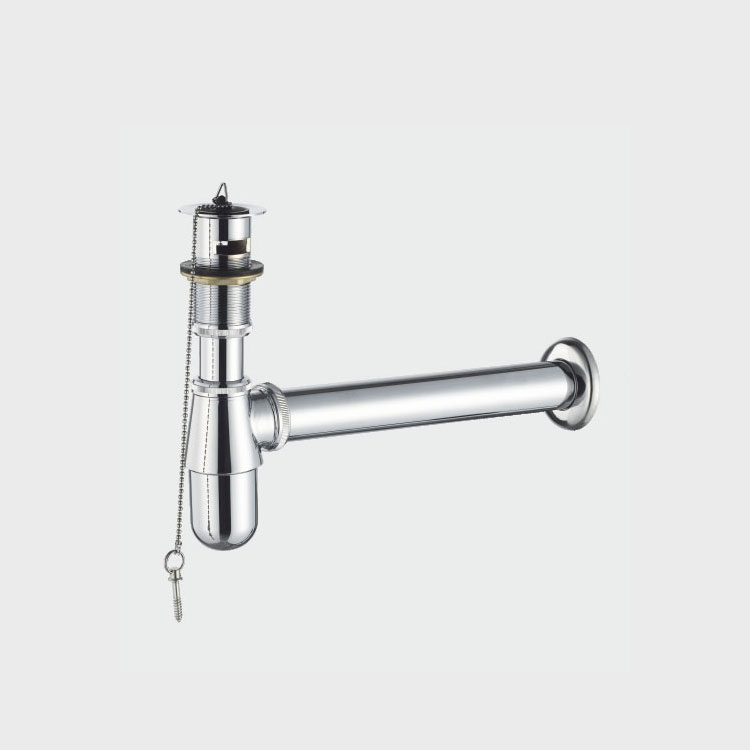
When specifying fluid handling components for industrial, automotive, or laboratory systems, one question consistently rises to the top: What is the maximum working pressure for a custom Irregular Brass Siphon Tube? The answer is not a single number—it depends on wall thickness, temper, fitting design, and operating conditions. At XIN GE LING, we engineer Irregular Brass Siphon Tube solutions that balance pressure capacity with formability, ensuring reliable performance in tight spaces and non-linear routing. This guide breaks down the pressure ratings, influencing factors, and practical limits you need to know before ordering custom components.
Pressure Rating Basics: What Does “Maximum Working Pressure” Mean?
Maximum working pressure (MWP) is the highest continuous internal pressure a Brass Siphon Tube can safely withstand at a reference temperature (typically 70°F / 21°C) without permanent deformation or rupture. For a Custom Irregular Brass Siphon Tube, MWP is calculated using Barlow’s formula, adjusted for bending stresses and joint integrity.
| Tube OD (in) | Wall Thickness (in) | Temper | MWP (psi) – Straight Section | MWP (psi) – Bent Section (1.5D radius) |
|---|---|---|---|---|
| 0.375 | 0.035 | Half-Hard | 1,200 | 950 |
| 0.500 | 0.049 | Half-Hard | 1,100 | 880 |
| 0.625 | 0.058 | Annealed | 850 | 680 |
| 0.750 | 0.065 | Half-Hard | 1,050 | 840 |
| 1.000 | 0.083 | Hard | 1,450 | 1,160 |
Data based on C27000 brass (65/35) at ambient temperature. Derate by 20% for continuous service above 150°F.
4 Critical Factors That Derate Pressure in Irregular Bends
A Custom Irregular Brass Siphon Tube rarely runs straight. Every bend, offset, and compound angle introduces stress concentrations that reduce burst strength. Here is how XIN GE LING evaluates each factor during design:
-
Bend Radius – Tighter radii (below 1.5× OD) cause wall thinning on the extrados (outer curve). A 10% wall reduction lowers MWP by approximately 15–18%.
-
Work Hardening – Bending increases local hardness but also introduces residual tensile stresses. Half-hard temper offers the best compromise for irregular shapes.
-
End Connections – Threaded ends (NPT, BSP) create stress risers. Flared or compression fittings preserve up to 95% of tube strength, while soldered joints retain about 85%.
-
Cyclic Pressure & Vibration – Repeated pulsation (e.g., from piston pumps) accelerates fatigue. XIN GE LING recommends a safety factor of 4:1 for dynamic applications, reducing MWP to 25% of static burst pressure.
How to Calculate Your Required MWP for a Custom Design
Before ordering, define your system’s peak pressure (including startup surges) and temperature. Use this step-by-step method:
-
Step 1 – Measure the straight equivalent length of your Irregular Brass Siphon Tube routing (include all bends as added length).
-
Step 2 – Determine the minimum wall thickness after bending (ultrasonic gauging is recommended).
-
Step 3 – Apply the temperature derating factor: for every 50°F above 70°F, reduce MWP by 8%.
-
Step 4 – Apply a joint efficiency factor (0.85 for brazed, 0.75 for threaded).
-
Step 5 – Compare against the burst pressure (typically 4× MWP for hydrostatic test).
XIN GE LING provides free pressure-calc worksheets for every custom inquiry, ensuring your Brass Siphon Tube never operates near its yield point.
FAQ – Common Questions About Irregular Brass Siphon Tube Pressure Ratings
Q1: Can I use a Custom Irregular Brass Siphon Tube for 2,000 psi hydraulic oil service?
A1: Not in standard wall thicknesses. For 2,000 psi continuous duty, you would need a heavy-wall Brass Siphon Tube (e.g., 1.000″ OD × 0.120″ wall) in hard temper, with all bends formed on a minimum 3× OD radius. Even then, threaded connections would limit MWP to ~1,600 psi. XIN GE LING typically recommends transitioning to steel or stainless for pressures above 1,500 psi in irregular geometries. However, we can manufacture custom-drawn seamless brass tubes with enhanced grain structure that push MWP to 1,800 psi—but that requires a full design review and prototype burst test. Always include your maximum surge pressure (not just steady-state) in the specification.
Q2: How does annealing affect the pressure rating of an Irregular Brass Siphon Tube after forming?
A2: Annealing softens the brass and relieves bending stresses, which actually improves ductility and fatigue life, but it lowers yield strength by 30–40%. For example, a half-hard Irregular Brass Siphon Tube that starts at 1,200 psi MWP will drop to approximately 750–800 psi after full annealing if the wall thickness remains unchanged. However, XIN GE LING uses a localized annealing process—only the bent zones are heat-treated while straight sections retain half-hard properties. This hybrid approach preserves 90% of the original MWP in the straight runs and 85% in the bends. We also offer stress-relief annealing (low-temperature) that reduces residual stress without significant strength loss, keeping MWP degradation under 5%. Always specify post-forming heat treatment on your drawing.
Q3: What safety factor does XIN GE LING recommend for a Custom Irregular Brass Siphon Tube in food-grade or potable water systems?
A3: For potable water or food-contact applications (FDA-compliant brass), XIN GE LING mandates a minimum design factor of 5:1 based on burst pressure, because these systems often see thermal expansion and water hammer. That means if your system runs at 200 psi, we design the Brass Siphon Tube to burst at no less than 1,000 psi. Additionally, we derate by an extra 15% for any bend angle exceeding 90° in a single plane. For irregular shapes with compound angles (e.g., offset bends in two planes), we apply a cumulative derating factor of 0.7×. We also recommend adding a pressure-relief valve set at 80% of the calculated MWP. All our food-grade Irregular Brass Siphon Tube products are hydrostatically tested to 150% of MWP and certified with traceable test reports.
Why Choose XIN GE LING for Your Custom Brass Siphon Tube?
With over 18 years in precision metal forming, XIN GE LING combines CNC mandrel bending, in-line wall-thickness monitoring, and 100% pressure testing for every Custom Irregular Brass Siphon Tube. We do not guess—we simulate bending stresses using FEA (finite element analysis) and validate with destructive burst samples. Our engineering team provides a stamped pressure-rating certificate with every custom order, eliminating ambiguity for your QA department.
Final Recommendation & Contact Us
Selecting the correct MWP for an Irregular Brass Siphon Tube requires balancing geometry, temper, temperature, and connection type. Never rely on a single data sheet—always request a custom calculation for your unique routing. XIN GE LING offers same-day preliminary pressure estimates and 3D bend simulation to de-risk your design.
Ready to specify your custom Brass Siphon Tube? Contact our engineering support team directly with your OD, wall, bend radii, and operating conditions. We will return a detailed pressure-rating proposal, CAD model, and sample approval within 48 hours. Your project deserves more than a standard tube; it deserves an engineered solution from XIN GE LING.