

What Makes a Bathroom Heater the Perfect Solution for Chilly Winter Mornings?
2026-09-03
You know that feeling. The alarm goes off. You drag yourself out of bed. And then you walk into a bathroom that feels like a walk-in freezer. The ceramic tile is cold against your feet. The air temperature is 10 degrees lower than the rest of the house. Showering becomes a test of willpower rather than a relaxing ritual. This is not just a matter of discomfort—it is a question of whether you will actually take a shower, or make do with a quick wash at the sink. For millions of homeowners, the winter bathroom is the single biggest daily challenge to maintaining personal hygiene habits.
1. Why Is the Bathroom the Coldest Room in Any House During Winter?
Bathrooms are inherently cold for several reasons. They typically have the smallest heating vents or radiators compared to the room size. The tile floors and walls conduct heat away from the body faster than carpet or wood. The bathroom exhaust fan, which is used to remove moisture after showers, also sucks out warm air, drawing in cold air from adjacent rooms or through gaps in the building envelope. The result is a room that is often 5 to 8°C cooler than the rest of the house on winter mornings. In a typical home, the bathroom temperature might be 16°C while the rest of the house is 21°C. This temperature differential is what makes stepping into the bathroom so uncomfortable.
The problem with relying on central heating alone: Central heating systems are designed for the whole house. They cannot target the bathroom specifically without overheating other rooms. This is why Bathroom Heaters are the most effective solution. They provide supplemental heat directly where it is needed, without affecting the rest of the home. In our factory, we manufacture Bathroom Heaters that can raise a 6m² bathroom from 15°C to 22°C in under 10 minutes.
At Jiaxing Chenrui Electrical Technology Co., Ltd., we have studied the thermal characteristics of standard bathrooms. The typical 6m² bathroom requires 1.5 to 2.0 kW of heating power to raise the temperature by 6°C within 10 minutes. This is the equivalent of 5,100 to 6,800 BTUs per hour. This is why we design our Bathroom Heaters with output ranging from 1.5 kW to 3.0 kW, depending on the model and the intended room size. A heater with insufficient power will take too long to warm up the room, defeating the purpose of quick morning comfort.
2. How Do Heating Element Types Affect Warm-Up Time and Comfort?
Not all Bathroom Heaters warm up the same way. The two most common heating element types are resistive wire (coil or ribbon) and ceramic PTC (positive temperature coefficient). Resistive wire elements heat up quickly but can reach very high temperatures and present a burn hazard. Ceramic PTC elements heat up quickly, operate at a lower surface temperature, and self-regulate to prevent overheating. The table below compares the performance of different heating element types in a typical bathroom setting.
| Heating element type | Warm-up time to 22°C (from 15°C, 6m² room) | Surface temperature (max) | Burn risk | Energy efficiency |
| Ceramic PTC (our design) | 8 to 10 minutes | 60°C | Low | High (self-regulating) |
| Resistive wire (coil) | 6 to 8 minutes | 200°C+ | High | Moderate |
| Oil-filled radiator | 20 to 30 minutes | 65°C | Low | Low (heat loss through walls) |
| Quartz/Infrared | Instant (radiant) | 150°C+ | High | Moderate (directional) |
Our Bathroom Heaters use ceramic PTC elements with an integrated fan. The fan circulates air over the ceramic element, ensuring even heat distribution throughout the room. The combination of PTC technology and forced air circulation provides a quick warm-up time without the risk of accidental burns. In our factory, we test the warm-up time of every Bathroom Heater unit under standard room conditions. The average warm-up time from 15°C to 22°C is 9 minutes for a 6m² room.
3. What Should You Consider When Choosing Between Mounting Options?
A Bathroom Heater can be installed in several ways: wall-mounted, ceiling-mounted, portable, or built into the ventilation system. Each option has implications for heat distribution, safety, and space usage. The table below compares the most common installation types based on actual homeowner feedback and our factory's installation data.
| Installation type | Heat distribution | Space requirements | Installation effort | Best use case |
| Wall-mounted (fan heater) | Even (forced air circulation) | Minimal (15 x 20 cm footprint) | Low (requires wall mount and power outlet) | Small to medium bathrooms (4-8m²) |
| Wall-mounted (radiant/panel) | Directional (heat lamp effect) | Minimal (flat panel) | Low (requires wall mount and power) | Quick heat for specific areas (shower zone) |
| Ceiling-mounted | Radiant (heat from above) | Requires ceiling space | Medium (needs electrical rough-in) | New builds or renovations |
| Portable plug-in | Localized (near heater) | Floor space | None (plug and play) | Rental properties, temporary use |
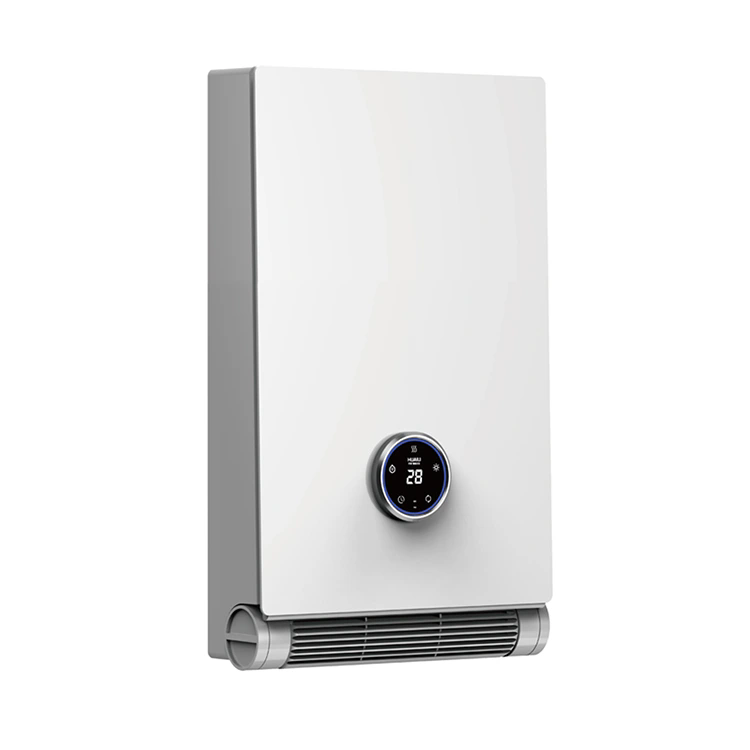
For most homeowners, the wall-mounted fan heater is the best balance of effectiveness, convenience, and cost. It provides even heat distribution throughout the room, does not require floor space, and is easy to install. In our factory, we manufacture wall-mounted Bathroom Heaters with a tilt-adjustable design that allows the user to direct airflow toward the shower area for quicker comfort during bathing. The heaters are rated IP24 for splash-proof protection, which is sufficient for bathroom use as long as the unit is installed outside zone 0 and zone 1 of the bathroom (the zones directly above or within the bath or shower area).
4. How Does Operating Cost Compare Between Different Heating Methods?
The operating cost of a Bathroom Heater depends on its power rating and the duration of use. A typical 2 kW heater uses 2 kWh per hour of operation. At an average electricity rate of $0.15 per kWh, this is $0.30 per hour. For a morning routine that includes 10 minutes of preheating and a 10 minute shower, the total operating cost is about $0.15 per day. This is approximately $4.50 per month for daily use. Compared to the cost of central heating (which heats the entire house), supplementing with a Bathroom Heater is significantly more cost-effective. In fact, running a 2 kW Bathroom Heater for 20 minutes a day costs about $5 per month, while increasing the central heating thermostat by 1°C for the entire house can add $15 to $20 per month. In our factory, we have calculated that using a Bathroom Heater instead of raising the whole house temperature by 2°C can save a typical homeowner $100 to $150 per heating season.
Frequently Asked Questions About Bathroom Heaters
Summary for Homeowners and Property Managers
A Bathroom Heater transforms the daily winter experience from a cold chore into a warm, comfortable routine. The correct heater provides rapid warm-up, consistent heat distribution, and safe operation. It is also one of the most cost-effective ways to improve comfort without raising the whole-house heating bill. The key is to select the right power rating, the right installation type, and a unit with safety features appropriate for the bathroom environment. Our factory has been manufacturing Bathroom Heaters for over a decade, with a focus on reliable ceramic PTC elements and splash-proof designs.
Jiaxing Chenrui Electrical Technology Co., Ltd. produces Bathroom Heaters that are tested for rapid warm-up, even heat distribution, and long-term durability. Each unit is equipped with overheat protection, tip-over protection (for portable models), and IP24 splash-proof rating. We provide full technical specifications and installation guidelines with every product.