

What Makes a High-Speed Blender Different from a Standard Blender?
2026-09-16
Walk down the small appliance aisle and you will see two types of blenders. One costs $40 and has a plastic jar with a star-shaped blade. The other costs $200 or more and has a heavy-duty motor with a stainless steel jar. Both are called blenders. Both can make a smoothie. But the difference in what they can actually do—and how well they do it—is far greater than the price difference suggests. This guide breaks down the engineering differences between a standard blender and a High-Speed Blender, and explains what those differences mean in practical kitchen use.
1. What Is the Difference in Motor Power and Blade Tip Speed?
The most fundamental difference between a standard blender and a High-Speed Blender is the motor and the resulting blade tip speed. A standard blender typically has a motor rated at 300 to 500 watts, with a no-load speed of 18,000 to 22,000 RPM. A High-Speed Blender has a motor rated at 1,200 to 2,200 watts, with a no-load speed of 25,000 to 45,000 RPM. Blade tip speed is calculated by multiplying the rotational speed by the circumference of the blade path. For a standard blender with a 60 mm blade diameter running at 20,000 RPM, the tip speed is about 63 m/s. For a High-Speed Blender with a 75 mm blade diameter running at 35,000 RPM, the tip speed is about 137 m/s—more than double. This matters because the kinetic energy of the blade is proportional to the square of the tip speed. Doubling the tip speed quadruples the energy available to break down food.
Why tip speed matters: At tip speeds below 80 m/s, the blade tends to push food around rather than pulverize it. At tip speeds above 120 m/s, the blade creates a vortex that pulls food into the blade zone and shatters cell walls. This is why a High-Speed Blender can make a smooth puree from fibrous vegetables, while a standard blender leaves chunks.
In our factory, we manufacture High-Speed Blender units with motors that are tested for continuous duty at full load. The motors use ball bearings rather than sleeve bearings, which reduces friction and extends the service life. We also use a thermal cutout that protects the motor from overheating during extended blending cycles.
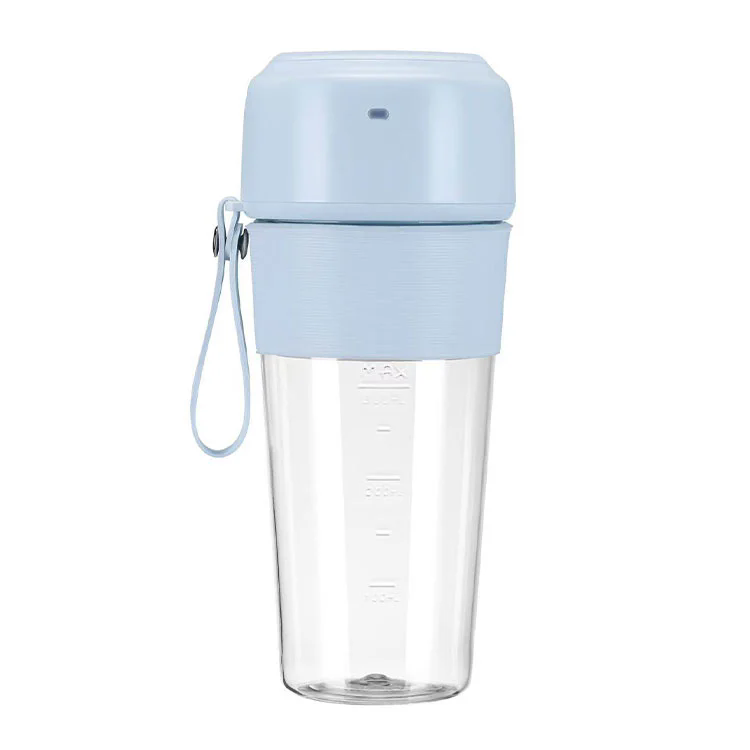
2. How Does Jar and Blade Design Affect Blending Performance?
The jar and blade design of a High-Speed Blender are engineered to work together with the motor. The jar has a square or hexagonal cross-section rather than a round one. This shape creates turbulence that interrupts the circular flow pattern and forces the food back into the blade zone. The blade assembly typically has four blades instead of two, and the blades are set at different angles to create both downward and upward flow. The blade is also mounted on a sealed bearing assembly that can withstand the higher speeds without leaking. The table below compares the design features of a standard blender and a High-Speed Blender.
| Design feature | Standard blender | High-Speed Blender |
| Jar shape | Round | Square or hexagonal |
| Blade count | 2 or 4 (flat) | 4 or 6 (angled, curved) |
| Blade material | Stainless steel (thin gauge) | Stainless steel (thick gauge, hardened) |
| Blade bearing | Sleeve or bushing | Sealed ball bearing |
| Jar material | Plastic or thin glass | Polycarbonate or thick glass |
| Lid design | Simple press-fit | Locking with vented cap |
The jar material is also important. A High-Speed Blender uses polycarbonate or thick glass that can withstand the impact of hard ingredients like ice and frozen fruit. A standard blender with a thin plastic jar may crack under the same conditions. Our factory uses injection-molded polycarbonate jars that are tested for impact resistance and clarity. The jars are also designed with a wide mouth for easy loading and a narrow base that fits most dishwasher racks.
3. What Can a High-Speed Blender Do That a Standard Blender Cannot?
The performance difference between the two types of blenders becomes obvious when you try to process certain ingredients. A standard blender can make a milkshake or a smoothie with soft fruit. It cannot make a smooth puree from raw kale, crush ice into snow, or grind grains into flour. A High-Speed Blender can do all of these things because of the higher tip speed and the vortex action. The table below shows the results of comparative tests performed in our factory using the same ingredients.
| Ingredient / task | Standard blender result | High-Speed Blender result |
| Ice cubes (10 pieces) | Crushed unevenly, some whole pieces remain | Snow-like consistency in 10 seconds |
| Raw kale (100g) | Fibrous chunks, not fully broken down | Smooth puree in 30 seconds |
| Almonds (100g) | Coarse meal, some whole nuts | Fine almond flour in 20 seconds |
| Frozen fruit (200g) | Chunks, motor stalls | Smooth sorbet in 25 seconds |
| Hot soup (500ml) | Not recommended (lid may pop off) | Safe with vented lid, smooth in 45 seconds |
The ability to process hot liquids is a safety feature that is often overlooked. A High-Speed Blender has a vented lid that allows steam to escape, preventing pressure buildup that can blow the lid off. A standard blender does not have this feature, and blending hot liquids in a standard blender is dangerous. Our factory includes a vented lid as standard on all of our High-Speed Blender models.
4. Is the Higher Price of a High-Speed Blender Justified for Everyday Use?
The price difference between a standard blender and a High-Speed Blender is typically 3 to 5 times. For a user who makes a smoothie once a week with soft fruit, the standard blender is sufficient. For a user who makes smoothies daily with frozen fruit and leafy greens, or who wants to make nut butters, soups, and baby food, the High-Speed Blender is the better investment. The motor is designed for continuous duty, so it will not burn out from frequent use. The blades stay sharp longer because they are made from hardened stainless steel. And the jar is more durable. Over a 5-year period, the cost per use of a High-Speed Blender may actually be lower than a standard blender if the standard blender needs to be replaced every 18 months.
Frequently Asked Questions About High-Speed Blenders vs Standard Blenders
Summary for Kitchen Appliance Buyers
The difference between a standard blender and a High-Speed Blender is not just the price tag. It is the motor power, the blade tip speed, the jar design, and the overall build quality. A High-Speed Blender is designed for continuous duty and can handle ingredients that a standard blender cannot. If you use your blender daily for frozen fruit, leafy greens, or nut butters, the higher price is justified by the performance and durability. If you only make occasional smoothies with soft fruit, a standard blender may be sufficient. Foshan TEH Electric Appliance Co., Ltd. has been manufacturing High-Speed Blender units for over 12 years and supplies to brands in more than 30 countries.
Foshan TEH Electric Appliance Co., Ltd. manufactures High-Speed Blender units with 1,200W to 2,200W motors, polycarbonate jars, and hardened stainless steel blades. We provide product samples and performance test data for all of our models.