

What Makes Compressed Air Dusters the Eco-Friendly Alternative to Aerosol Dust Removers?
2026-09-07
A typical electronics manufacturing facility goes through 40 to 60 cans of aerosol dust remover per month. That is 500 to 700 cans per year. Each can contains 200 to 400 grams of propellant—often a hydrofluorocarbon (HFC) with a global warming potential hundreds of times higher than CO₂. When you add the cost of the cans themselves, the disposal fees, and the regulatory risk of using HFCs, the true cost of aerosol dust removers is much higher than the price on the shelf. This guide is written for procurement professionals who need to make a business case for switching to compressed air dusters.
1. What Is in an Aerosol Dust Remover and Why Is It a Problem?
Most aerosol dust removers contain a blend of HFC-134a (1,1,1,2-tetrafluoroethane) and HFC-152a (1,1-difluoroethane). These gases have global warming potentials (GWP) of 1,430 and 124 respectively. A single 400 ml can containing 200 grams of HFC-134a has a carbon footprint equivalent to burning 286 kilograms of coal. For a facility that uses 500 cans per year, the annual carbon footprint is equivalent to 143 metric tons of CO₂. In addition, the cans themselves are pressure vessels that require special disposal. In many jurisdictions, they cannot be disposed of in regular waste streams. The canisters are also expensive to ship because they are classified as hazardous materials. In our factory, we have calculated that the total cost of an aerosol can—including purchase, shipping, disposal, and regulatory compliance—is $8 to $12, compared to the $4 to $6 purchase price. A Compressed Air Duster, on the other hand, uses ambient air, produces zero greenhouse gas emissions, and is not classified as a hazardous material.
2. How Does the Cost of a Compressed Air Duster Compare Over a 5-Year Period?
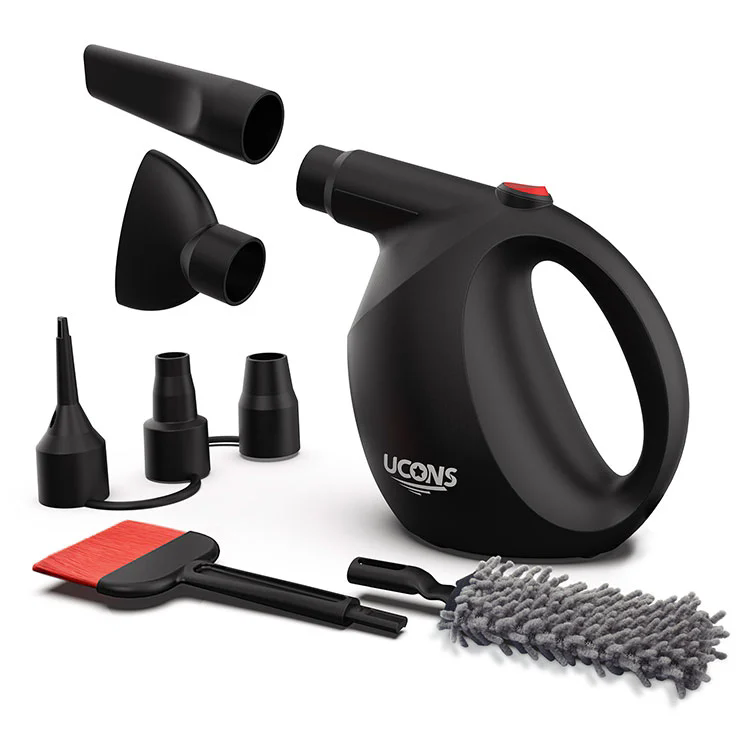
The upfront cost of a Compressed Air Duster is higher than a single can of aerosol, but the total cost of ownership is lower. A typical Compressed Air Duster costs $60 to $120 and has an expected life of 5 to 8 years. It requires no replacement cartridges and no special disposal. The only ongoing cost is the electricity to run the motor, which is about $0.50 per year for a typical facility. The table below compares the 5-year total cost of ownership for a Compressed Air Duster versus aerosol dust removers for a facility that uses 50 cans per year.
| Cost item | Compressed Air Duster | Aerosol cans (50 per year) |
| Initial equipment cost | $80 (one-time) | $0 (no equipment) |
| Annual consumable cost | $0.50 (electricity) | $300 (50 cans × $6) |
| Annual disposal cost | $0 | $50 (hazardous waste handling) |
| Annual shipping cost (hazardous class) | $0 | $75 (estimated premium) |
| 5-year total cost | $82.50 | $2,125 |
| Total savings over 5 years | $2,042.50 | |
The savings are even more significant for larger facilities. A plant that uses 100 cans per month would save over $7,000 per year by switching to a Compressed Air Duster. In our factory, we have helped customers switch from aerosols to Compressed Air Duster units, and they have consistently reported savings of 80 to 90 percent on their cleaning costs.
3. What Are the Regulatory Drivers for Switching Away from Aerosol Dust Removers?
The regulatory environment for HFCs is becoming increasingly restrictive. The Kigali Amendment to the Montreal Protocol requires a phase-down of HFCs by 80 to 85 percent by 2045. In the European Union, the F-Gas Regulation (EU 2024/573) prohibits the use of HFCs with a GWP above 150 in certain applications, including aerosol products. The United States is implementing similar restrictions under the AIM Act. These regulations are creating a compliance risk for facilities that continue to use aerosol dust removers. In our factory, we have seen customers facing fines and penalties for using prohibited substances. A Compressed Air Duster is not subject to any of these regulations because it uses only ambient air. By switching, facilities can eliminate their compliance risk and avoid the cost of tracking and reporting their HFC usage.
Regulatory timeline: EU F-Gas Regulation will ban HFC aerosol products with GWP > 150 starting in 2026. US EPA is implementing a similar restriction under the AIM Act. Facilities that switch now can avoid the supply disruption that will occur when these restrictions take effect.
4. What Are the Performance Differences Between Compressed Air Dusters and Aerosols?
Performance is a key concern for facility managers. A Compressed Air Duster produces an air stream of 25 to 40 meters per second, depending on the nozzle configuration. This is comparable to the air stream from an aerosol can. However, the Compressed Air Duster has two advantages: the air flow is continuous and does not drop off as the can empties, and the air is free of the bitterants that are added to aerosol cans to prevent inhalation abuse. In our factory, we have tested Compressed Air Duster units side by side with aerosol cans. The Compressed Air Duster performed equally well in removing dust from electronics, optical lenses, and precision instruments.
Frequently Asked Questions About Compressed Air Dusters vs Aerosols
Summary for Procurement and Sustainability Professionals
The business case for switching from aerosol dust removers to a Compressed Air Duster is clear. The savings in consumable costs alone are substantial, and the environmental benefits are even more significant. A Compressed Air Duster eliminates the use of high-GWP greenhouse gases, reduces hazardous waste disposal costs, and eliminates regulatory compliance risk. The performance is comparable, and the maintenance requirements are minimal. For any facility that uses aerosol dust removers on a regular basis, the switch to a Compressed Air Duster is a practical and cost-effective choice.
Foshan TEH Electric Appliance Co., Ltd. manufactures Compressed Air Duster units that are designed for industrial and commercial use. We provide a full range of models, from bench-top units to portable units, with varying air flow and pressure capabilities. Our technical team can help you select the right model for your specific application.