

What Makes Tempered Glass a Premium Choice for Wall Switch Panels?
2026-10-29
A homeowner runs a finger across a wall switch panel every time the light is turned on or off. That contact happens dozens of times a day, and it shapes the perception of the entire room. A plastic panel that scratches, attracts dust, or yellows after two years undermines the finish of the wall. A tempered glass panel keeps its surface and its appearance for the life of the installation. This is why tempered glass has become a premium choice in Home Electricals. The electrical rating of the switch is the same, but the touch surface is different. This guide explains what the tempering process does and what to verify when specifying a glass panel.
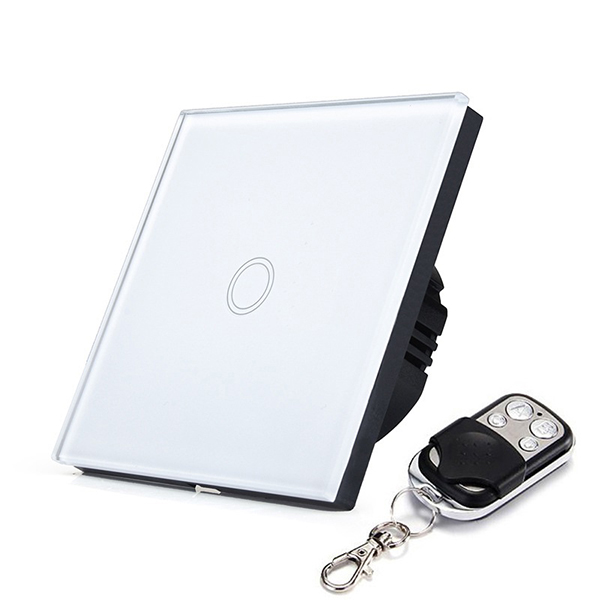
1. Why Does the Touch Surface of a Wall Switch Panel Matter More Than Its Electrical Rating?
The electrical rating of a wall switch is a safety requirement. It determines whether the switch can carry the load without overheating. Once the rating is met, the rating does not differentiate one product from another. The differentiation comes from the touch surface. The user sees and feels the panel every day. A scratched or discolored panel makes the room look worn, even when the switch works perfectly. A clean, hard surface makes the room look new. In our factory, we produce switch panels in tempered glass, acrylic, and coated plastic. Wenzhou Zhechi Electric Co., Ltd. has been manufacturing Home Electricals for over 12 years.
The touch surface also affects the cleaning effort. A surface that holds static charge attracts dust, and a surface that is soft collects fingerprints that are difficult to remove. The glass surface is hard and dense, so it resists both. This is the practical reason why designers specify glass for premium residential and hospitality projects.
2. How Does the Tempering Process Change the Mechanical Properties of Glass?
Tempering is a thermal process. The glass is cut to size, edge-worked, and then heated to about 620 to 680 degrees Celsius. It is then cooled rapidly by air jets. The surface cools faster than the core, so the surface contracts and the core remains hot. When the core cools and contracts, it pulls the surface into compression. The surface compressive stress is typically 90 to 150 megapascals. The compressive layer makes the glass stronger and changes the way it breaks. The table below compares annealed glass and tempered glass.
| Property | Annealed glass | Tempered glass |
| Surface compressive stress | None | 90 – 150 MPa |
| Impact strength (relative) | 1.0 | 3 – 5 times higher |
| Fragmentation on break | Sharp, irregular shards | Small, granular pieces |
| Thermal shock resistance | Low (about 40°C differential) | High (about 200°C differential) |
| Cutting after tempering | Possible | Not possible |
In our factory, we verify the surface stress of every tempered batch with a surface stress meter. The reading must be within the specified range. We also perform a fragmentation test on a sample from each batch. The fragment count must be at least 40 pieces in a 50 by 50 millimeter square, which confirms that the tempering is uniform. Wenzhou Zhechi Electric Co., Ltd. provides the stress and fragmentation test report with each production lot.
3. What Happens to Scratch Resistance and Cleanability on a Tempered Glass Surface?
The tempered glass surface has a Mohs hardness of about 5.5 to 6.0. This is harder than most of the objects that come into contact with a switch panel, such as fingernails, rings, and cleaning cloths. The surface resists the fine scratches that accumulate on softer plastic panels. The glass surface is also non-porous and does not hold a static charge, so dust and fingerprints do not bond to it. The table below compares tempered glass with common panel materials.
| Panel material | Surface hardness | Scratch resistance | Cleaning effort | Yellowing resistance |
| Tempered glass | Mohs 5.5 – 6.0 | Excellent | Low (wipe with cloth) | Excellent |
| Acrylic | Mohs 2.0 – 3.0 | Poor | Moderate (attracts dust) | Good |
| Polycarbonate | Mohs 2.5 – 3.0 | Poor | Moderate | Fair (can yellow) |
| Coated plastic | Mohs 2.0 – 3.0 | Fair (coating wears) | High (static charge) | Poor (coating yellows) |
Product engineer's note: The cleaning effort is a specification item, not a marketing claim. A panel that requires frequent wiping with a damp cloth is a daily inconvenience. A panel that can be wiped with a dry microfiber cloth is easier to maintain. In our factory, we test the cleaning effort by applying a standard fingerprint oil and wiping with a dry cloth for a fixed number of strokes. The tempered glass surface cleans in one or two strokes, while the coated plastic surface requires five to six strokes. Wenzhou Zhechi Electric Co., Ltd. provides the cleaning test result on request.
4. Why Does Glass Thickness and Edge Treatment Determine Safety and Installation Quality?
The glass thickness for a switch panel is typically 3 to 5 millimeters. A thinner glass is lighter and more sensitive to touch, but it is more fragile at the edges. A thicker glass is stronger, but it adds weight and may reduce the touch sensitivity of a capacitive switch. The edge treatment is equally important. A raw cut edge has micro-cracks that can propagate and cause the panel to break. The edge must be ground and polished, and in some designs, chamfered. The edge treatment reduces the edge stress and improves the appearance. In our factory, we grind and polish every edge before tempering. We also inspect the edge under a magnifier for chips and cracks. Wenzhou Zhechi Electric Co., Ltd. uses a 3 millimeter glass for standard panels and a 4 millimeter glass for large panels that cover multiple switch gangs.
The adhesive and the mounting structure also affect the stress distribution. A panel that is bonded with a rigid adhesive and mounted on an uneven wall can develop concentrated stress at the high points. We recommend a pressure-sensitive adhesive with a controlled thickness and a mounting frame that keeps the panel flat. The installation instructions should specify the maximum wall flatness deviation.
5. How Should Designers Specify and Verify Tempered Glass Panels for Home Electricals?
The specification should include the glass thickness, the surface stress range, the edge treatment, the printing process, the adhesive type, and the impact test standard. The verification should include a surface stress measurement, a fragmentation test, an impact test, and an adhesion test. In our factory, we perform these tests on a sample basis for each production lot and provide the test report with the shipment. We also recommend that the designer verify the touch sensitivity of the assembled panel, because the glass thickness and the adhesive layer affect the capacitive coupling. Wenzhou Zhechi Electric Co., Ltd. provides a touch sensitivity test for each panel design.
We recommend that the designer specify the impact test according to IEC 60669 or the applicable national standard. The panel should withstand the specified impact without breaking. If the panel does break, the fragments should be granular and should not have sharp edges. The fragmentation test confirms this behavior.
Frequently Asked Questions About Tempered Glass Wall Switch Panels
Summary for Product Engineers and Designers
Tempered glass is a premium choice for wall switch panels because the tempering process creates a compressive stress layer that increases the strength and changes the break pattern to small, granular pieces. The dense surface resists scratches and is easy to clean. The glass thickness and the edge treatment determine the safety and the installation quality. The specification should include the thickness, the surface stress range, the edge treatment, the printing process, and the adhesive type. The verification should include a stress measurement, a fragmentation test, an impact test, and an adhesion test. Wenzhou Zhechi Electric Co., Ltd. has been manufacturing Home Electricals for over 12 years and provides full tempered glass panel specification and verification support for our customers.