

What Pressure Does a Chrome Concealed Thermostatic Shower System Need to Work Properly
2026-11-02
Water pressure is the single most overlooked factor when homeowners specify a Chrome Concealed Thermostatic Shower System. Even a premium unit from BOYU cannot deliver stable temperature control if the incoming supply falls outside its operating range. This guide explains the pressure requirements, how to measure your supply, and what to do when readings fall short — so you can specify with confidence before the wall is closed up.
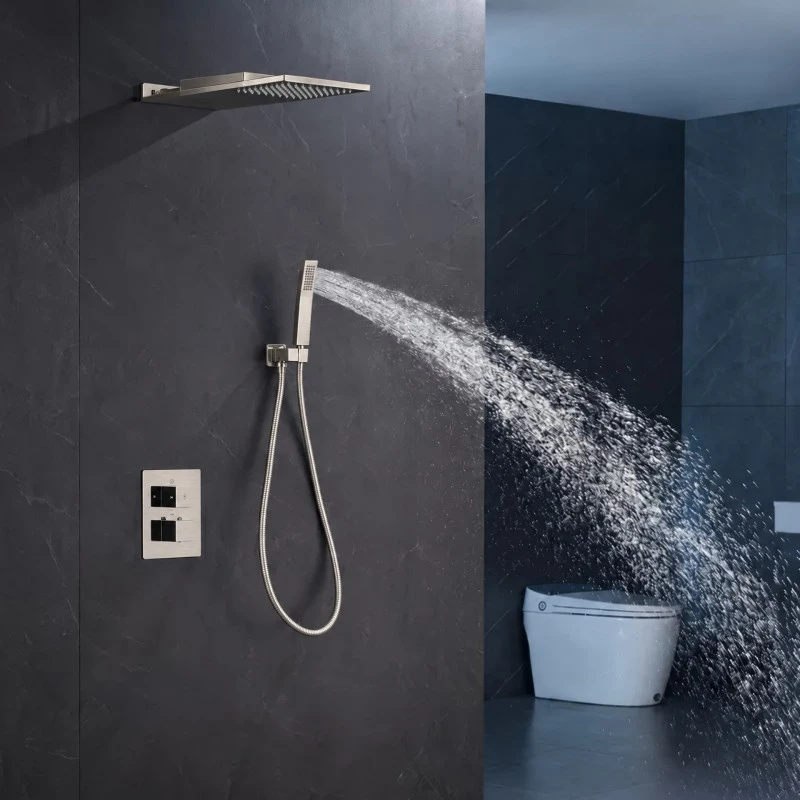
Why Thermostatic Cartridges Are Pressure-Sensitive
A thermostatic cartridge balances hot and cold flows through a wax or paraffin element. It needs a minimum dynamic pressure to move the element quickly enough to respond to temperature changes, and a maximum limit to avoid stressing seals and internal components.
BOYU engineers its Chrome Concealed Thermostatic Shower System range around a working band of 0.5–5.0 bar dynamic pressure, with 1.0–3.0 bar being the sweet spot for precise, fast-acting temperature stability.
Recommended Pressure Ranges at a Glance
| Pressure Reading | Range (bar) | Suitability for a Chrome Concealed Thermostatic Shower System |
|---|---|---|
| Below minimum | < 0.5 | Not suitable — erratic temperature, cartridge will not modulate |
| Low but workable | 0.5–1.0 | Acceptable; consider a booster pump for rain heads |
| Optimal | 1.0–3.0 | Ideal — fastest response, most stable outlet temperature |
| High | 3.0–5.0 | Acceptable; a pressure-reducing valve is recommended above 4.0 |
| Excessive | > 5.0 | Not suitable without a PRV — risk of seal failure and noise |
Static vs Dynamic Pressure: The Distinction That Matters
Static pressure is what a gauge reads with no outlets open. Dynamic pressure is what remains while water is flowing — and it is dynamic pressure that determines whether your Chrome Concealed Thermostatic Shower System performs. A system reading 3.0 bar static can drop to 0.4 bar dynamic in a poorly sized installation, which is why BOYU recommends testing at the outlet with the shower running.
Minimum Flow Rate Requirements
Pressure alone is not enough. Thermostatic valves also need adequate flow:
-
Minimum flow rate: 8–10 litres per minute for a standard handset outlet
-
Rain head outlets (200–300 mm): 12–18 litres per minute recommended
-
Dual-outlet operation: confirm the supply can sustain both simultaneously
How to Measure Your Supply Correctly
-
Fit a pressure gauge to the nearest outlet, ideally a garden tap on the same branch.
-
Record the static reading.
-
Open two cold taps elsewhere and record the dynamic reading.
-
Repeat at peak demand times (early morning, evening).
-
Compare results against the BOYU specification sheet for your chosen model.
Solutions When Pressure Falls Short
| Scenario | Recommended Action |
|---|---|
| 0.3–0.5 bar dynamic | Fit a single-outlet booster pump |
| Below 0.3 bar dynamic | Install a break tank and pump set |
| Gravity-fed system | Consider a pumped supply or unvented cylinder upgrade |
| Above 5.0 bar | Fit a pressure-reducing valve at the inlet |
Installation Notes from BOYU
-
Use 15 mm pipework as a minimum; 22 mm on long runs improves dynamic pressure.
-
Keep equal pipe lengths on hot and cold inlets to support balanced mixing.
-
Fit isolation valves for future servicing of the cartridge.
-
Flush pipework thoroughly before commissioning the Chrome Concealed Thermostatic Shower System.
Frequently Asked Questions
What pressure does a Chrome Concealed Thermostatic Shower System need to work properly?
A Chrome Concealed Thermostatic Shower System typically requires a minimum dynamic pressure of 0.5 bar to operate, with 1.0–3.0 bar delivering optimal temperature stability; installations above 5.0 bar require a pressure-reducing valve to protect the cartridge and seals.
Can a Chrome Concealed Thermostatic Shower System work on a gravity-fed system?
A Chrome Concealed Thermostatic Shower System can work on gravity-fed supplies only if the cold tank provides at least 5 metres of head (roughly 0.5 bar) above the outlet; most gravity installations fall below this, so a booster pump or a switch to a mains-pressure supply is normally required.
Why does my Chrome Concealed Thermostatic Shower System lose temperature when other taps are used?
Pressure fluctuation is the usual cause: when another outlet opens, dynamic pressure at the Chrome Concealed Thermostatic Shower System drops and the cartridge struggles to maintain balance, which points to undersized pipework, unequal hot and cold runs, or a supply that is already close to the 0.5 bar minimum.
Final Thoughts
Correct pressure is the foundation of reliable thermostatic performance. Confirm your dynamic reading before purchase, match it to the published specification, and specify pipework that protects that margin for years to come.
Contact us at BOYU today to discuss your project, request a specification sheet, or get expert guidance on selecting the right Chrome Concealed Thermostatic Shower System for your water pressure conditions.