

Where Can a PPR Shower Mixer Solve the Hidden Risks of Concealed Shower Installation?
2026-09-30
Article Summary: A concealed shower system can create a difficult plumbing problem: once the mixer valve is installed behind a finished wall, repairing a hidden leak can become expensive, disruptive, and time-consuming. A PPR Shower Mixer is designed around a welded PPR connection rather than relying entirely on concealed threaded joints. This article explains how the system works, why connection reliability matters, what to consider before installation, how different way configurations support modern shower layouts, and how buyers can evaluate product quality, customization, pressure testing, and supplier capabilities before placing an order.
Why Hidden Shower Connections Deserve More Attention
Concealed shower systems are increasingly used when homeowners, hotels, apartments, and commercial bathrooms require a clean appearance and efficient use of wall space. The visible installation can look simple: a shower control, outlet, hand shower, overhead shower, or other accessory appears on the finished wall while the main plumbing components remain inside the wall.
The difficulty is that the most important connection is often the one that cannot be seen after construction is completed. If a concealed threaded connection develops a leak, the problem may remain unnoticed until moisture reaches surrounding materials or the wall finish begins to show damage.
This is why the connection method should be considered at the design stage rather than treated as a minor installation detail. For concealed plumbing, preventing potential leakage is generally more practical than planning to repair a concealed connection later.
Why can concealed leakage become a costly problem?
- The connection may be located behind tiles, cement board, or other finished wall materials.
- Access for inspection is limited after the wall has been closed.
- A repair may require removing decorative surfaces.
- Water leakage can affect surrounding construction materials if it remains undetected.
- Hotels and residential projects may face additional labor and downtime costs during repairs.
How a PPR Shower Mixer Addresses the Connection Problem
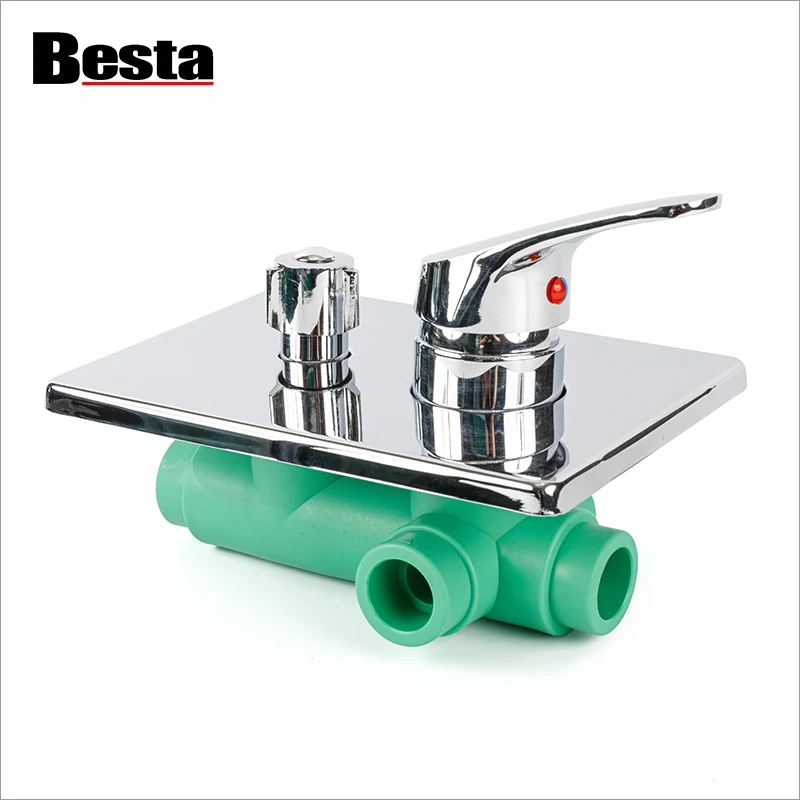
A PPR Shower Mixer uses polypropylene random copolymer piping technology in the mixer body and is designed to work with welded PPR pipe connections. Instead of depending solely on a concealed threaded connection, the PPR system can be joined through heat fusion.
According to the product information from Ningbo Ouding Building Material Technology Co., Ltd., the development of its PPR shower mixer was motivated by concerns about potential leakage associated with concealed copper mixer connections. The company explains that welding the PPR connection is intended to reduce this particular connection risk. :contentReference[oaicite:1]{index=1}
Heat fusion creates a continuous connection between compatible PPR components when the installation procedure is performed correctly. This makes the connection method especially relevant for concealed installations where long-term accessibility is limited.
Welded Connection
PPR components can be connected by heat fusion, creating a joint without relying exclusively on traditional concealed threading.
Concealed Installation
The mixer can be integrated into wall-mounted shower systems where space efficiency and a clean finished appearance are important.
Multiple Configurations
Different way configurations can support shower systems with different numbers of water outlets or functions.
What is the practical benefit for a project?
The biggest practical consideration is risk management. A concealed plumbing component should be selected not simply because it fits the visible design, but because its connection method, dimensions, installation procedure, and testing requirements are suitable for the project.
For contractors, this means the installation method should be clearly understood before the wall is closed. For distributors, it means product specifications and installation documentation are important when recommending a mixer to customers. For importers, quality-control procedures and supplier consistency are equally important.
What Makes the Construction Suitable for Concealed Systems?
A shower mixer is more than a decorative control handle. It is part of the water distribution system, so its internal structure must work together with the piping, cartridge, outlets, and external controls.
PPR mixer body
The PPR body provides the main connection structure for the pipework. Using compatible PPR materials and correct fusion procedures is important because the strength and sealing performance of a welded joint depend on both the component and the installation process.
Ceramic cartridge
The cartridge controls water flow and temperature adjustment. Product configurations may use ceramic cartridges manufactured in China or customer-designated imported cartridge brands. Supplier information indicates that cartridge selection can be customized according to customer requirements. :contentReference[oaicite:2]{index=2}
External handle and cover
The handle and decorative cover provide the user interface and determine much of the visible appearance. Available customization can include different handle materials and finishes, as well as round or square stainless-steel cover designs.
| Component | Main Function | Important Buyer Consideration |
|---|---|---|
| PPR mixer body | Connects the mixer to the PPR plumbing system | Material compatibility, dimensions, connection design |
| Ceramic cartridge | Controls water flow and temperature | Cartridge specification, brand, availability, replacement support |
| Handle | Controls the mixer | Material, finish, design, operating feel |
| Decorative cover | Provides the visible finishing element | Size, shape, material, finish and compatibility |
How Do Different Way Configurations Support Shower Functions?
Modern shower systems may contain more than one water outlet. Depending on the bathroom design, a user may need to control an overhead shower, hand shower, body jets, or another outlet. This is where the number of ways in a shower mixer becomes important.
The product range described by the manufacturer includes PPR three-way, four-way, five-way, and six-way shower mixers. This provides flexibility for different concealed shower layouts. :contentReference[oaicite:3]{index=3}
| Configuration | Potential Application | Planning Focus |
|---|---|---|
| 3-way | Compact multi-function shower systems | Confirm the number and purpose of outlets |
| 4-way | Bathrooms requiring additional shower functions | Match each outlet with the plumbing layout |
| 5-way | Multi-outlet residential or hospitality shower systems | Confirm valve position and outlet routing |
| 6-way | More complex multi-function shower installations | Prepare a detailed installation drawing before construction |
The exact configuration required should always be determined by the actual shower design rather than choosing a higher number simply because it appears to provide more functions. An unnecessarily complex installation can increase planning and installation requirements.
What Should Be Checked Before Installation?
Many plumbing problems can be prevented before the installer begins. A good installation process starts with verifying the product and the project requirements together.
1. Confirm the installation drawing
Check inlet and outlet positions, center distances, installation depth, hot and cold water orientation, and the planned position of the finished wall.
2. Confirm pipe compatibility
The mixer and connecting PPR pipes should be compatible with the intended welding method. The installer should also use suitable equipment and follow the recommended fusion procedure.
3. Protect the valve position
The mixer body should be installed at the correct depth relative to the final wall surface. Incorrect positioning can make the decorative cover or handle difficult to install later.
4. Test before closing the wall
Pressure testing should be completed before the concealed installation is permanently covered. This provides an opportunity to identify connection problems while the system is still accessible.
5. Photograph the concealed installation
For construction projects, keeping installation photographs can help document the position of concealed components for future maintenance.
How Can Buyers Evaluate Quality Before Purchasing?
Price is only one part of the purchasing decision for a concealed plumbing component. Because the mixer may remain inaccessible for years, buyers should evaluate manufacturing controls, component quality, testing procedures, and supplier support.
The manufacturer states that imported raw materials are used for its mixer valve bodies and that products are pressure tested before packaging. It also states that ceramic cartridges can be specified by customers. :contentReference[oaicite:4]{index=4}
A practical supplier checklist
- Ask for complete product dimensions and installation drawings.
- Confirm available way configurations.
- Ask which PPR material is used for the mixer body.
- Confirm the ceramic cartridge specification.
- Request information about pressure testing.
- Check whether samples are available before bulk purchasing.
- Confirm packaging requirements for export shipments.
- Discuss OEM logo and appearance requirements if necessary.
- Confirm whether the supplier can maintain consistent specifications across repeated orders.
How Can OEM Customization Support Different Projects?
For distributors and plumbing brands, the physical product is only part of the requirement. Packaging, logo placement, handle design, surface finish, and cartridge selection may need to match an existing product range.
Ningbo Ouding Building Material Technology Co., Ltd. states that OEM services are available for its PPR shower mixer products. According to its product information, customer logos can be applied to the PPR body, handle, inner packaging box, and outer carton. Handle options include zinc-alloy or ABS configurations, while decorative covers can be supplied in different designs and finishes. :contentReference[oaicite:5]{index=5}
Why does OEM flexibility matter?
A distributor may already have an established bathroom hardware brand. Changing the entire product appearance to accommodate a supplier can create unnecessary packaging and marketing work. OEM customization allows the product to fit more naturally into an existing product family.
However, customization should be confirmed before mass production. Buyers should obtain approved drawings, samples, packaging specifications, logo artwork, and component details in writing.
What Should Importers and Project Buyers Ask Suppliers?
For wholesale purchasing, the most useful questions are those that reduce uncertainty before production and shipment.
| Question | Why It Matters |
|---|---|
| What way configurations are available? | Ensures the product matches the planned shower functions. |
| What are the exact dimensions? | Prevents installation problems caused by incorrect wall positioning. |
| How is the product pressure tested? | Provides information about factory quality-control procedures. |
| Which ceramic cartridge is used? | Helps evaluate operating performance and future replacement needs. |
| Can OEM branding be provided? | Important for distributors and private-label projects. |
| Can samples be supplied? | Allows the buyer to check construction and appearance before bulk orders. |
| What packaging options are available? | Helps reduce transport damage and supports retail presentation. |
A supplier that can provide clear answers, drawings, samples, and documented specifications makes the purchasing process easier to manage. This is particularly important when the product will be installed inside walls and used repeatedly over a long period.
How Can the Service Life of a Concealed Mixer Be Protected?
Even a well-designed shower mixer depends on correct installation and suitable operating conditions. The following practices can help protect the complete system.
- Flush the pipe system: Remove construction debris before installing or operating the final shower components.
- Complete pressure testing: Test the concealed plumbing before wall finishing.
- Use correct welding equipment: Follow the appropriate PPR fusion procedure for the pipe and fitting system.
- Avoid unnecessary mechanical stress: Do not force pipes or fittings into positions that place excessive load on the mixer.
- Keep installation records: Store drawings, photographs, product information, and batch details for future reference.
- Use compatible replacement parts: When servicing the visible control components, use suitable cartridges and accessories.
The goal is straightforward: once the wall has been completed, the concealed plumbing should require as little intervention as possible. Good product selection and good installation practices work together to achieve that goal.
Frequently Asked Questions
A PPR Shower Mixer is a shower mixing valve designed with a PPR body for integration into PPR plumbing systems. It can use welded PPR connections and is particularly suitable for concealed shower installations.
The primary difference is the connection method. A PPR system can use heat-fusion welding between compatible PPR components, while traditional systems may rely on threaded connections. For concealed installations, the welded connection approach is intended to reduce potential leakage risks associated with concealed threaded joints.
The product range described by the manufacturer includes three-way, four-way, five-way, and six-way shower mixers. The appropriate configuration depends on the number and type of water outlets required by the shower design. :contentReference[oaicite:6]{index=6}
Yes. OEM customization is available according to the manufacturer's product information. Options can include logo placement, handle materials, decorative cover designs, finishes, packaging, and ceramic cartridge selection. :contentReference[oaicite:7]{index=7}
Yes. Pressure testing before closing the wall is an important installation step because it provides an opportunity to identify potential connection or plumbing problems while the system remains accessible. The manufacturer states that its products are pressure tested before packaging. :contentReference[oaicite:8]{index=8}
They are intended for concealed shower systems in residential, hospitality, and other bathroom applications where multiple water outlets and space-efficient installation are required. The manufacturer reports sales to markets including South America, the Middle East, and Africa. :contentReference[oaicite:9]{index=9}
Request product samples, installation drawings, dimensions, component specifications, cartridge information, testing details, packaging specifications, and confirmed OEM requirements. These documents help ensure that the supplied product matches the intended project.
Final Considerations for a More Reliable Concealed Shower System
A concealed shower mixer is easy to overlook because most of the product disappears behind the wall. Yet that hidden position is precisely why the component deserves careful attention. A visible fitting can usually be inspected or replaced with relatively little disruption. A concealed connection requires much more planning because access becomes limited after the bathroom is completed.
A PPR Shower Mixer offers a different approach by combining a PPR mixer body with welded pipe connections. For projects where concealed installation, connection reliability, flexible outlet configurations, and OEM requirements are important, understanding the complete system is more useful than evaluating the mixer by appearance alone.
Before purchasing, focus on the details that affect the finished installation: the number of ways, dimensions, connection method, cartridge specification, pressure testing, installation procedure, customization requirements, and supplier quality controls.
With the right specifications confirmed before production and the correct installation procedure followed on site, a concealed shower system can be designed with fewer avoidable risks and a cleaner finished appearance.
Looking for a PPR Shower Mixer for Your Project?
Ningbo Ouding Building Material Technology Co., Ltd. provides PPR shower mixer solutions for different concealed shower configurations and supports OEM requirements for distributors, importers, and project customers.
Whether you need a three-way, four-way, five-way, or six-way configuration, customized branding, specific cartridge requirements, or export packaging, a detailed product specification can be prepared around your project needs.
Need product details, samples, OEM customization, or a quotation? Contact us to discuss your PPR Shower Mixer requirements with the supplier team.