

Article Summary
A reliable shower installation depends on more than the visible faucet. The concealed valve, pipe connections, water pressure, material compatibility, and installation quality all influence long-term performance. A PPR Four Ways Shower Mixer provides a practical solution for plumbing systems designed around polypropylene random copolymer piping, particularly when installers want to reduce complicated connections inside finished walls. This guide explains the product's configuration, key advantages, selection criteria, installation considerations, maintenance requirements, and purchasing factors. It also outlines how contractors, distributors, and project buyers can evaluate a suitable model for residential and commercial bathroom projects.
1. Understanding the PPR Four Ways Shower Mixer
A shower mixer is a central component of a bathroom water supply system. It receives hot and cold water, allows the user to regulate the mixture, and directs water through the designed outlet configuration. Although the external handle and showerhead attract most attention, the concealed valve body and its pipe connections are equally important to the installation's reliability.
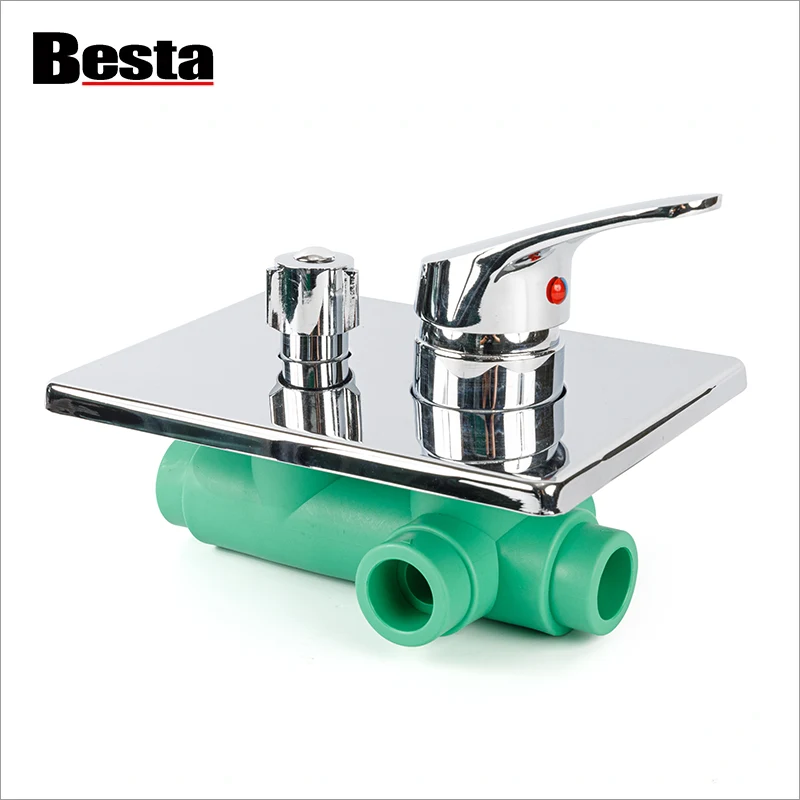
A PPR Four Ways Shower Mixer is designed for plumbing installations that use PPR piping. In the product configuration offered by Ningbo Ouding Building Material Technology Co., Ltd., the four-way model is described as having two inlets and two outlets. Its body combines PPR and nylon components, with different options available for handles, decorative covers, and ceramic cartridges.
The four-way designation describes the connection arrangement rather than automatically indicating four independent shower functions. The actual water routing and control functions depend on the internal valve design. Buyers should confirm the manufacturer's connection diagram and operating instructions before specifying the product for a particular shower system.
How the Main Components Work Together
- PPR valve body: Forms the main housing and provides connections compatible with the intended PPR piping system.
- Connection ports: Accommodate the designed hot-water, cold-water, and outlet pathways.
- Ceramic cartridge: Controls water mixing or flow according to the valve's internal design.
- Operating handle: Allows the user to adjust the water supply and temperature.
- Decorative cover: Provides a finished appearance around the concealed installation.
These components must work as a coordinated system. Even a well-manufactured valve can perform poorly if the installer reverses the connections, uses incompatible pipe sizes, or positions the valve incorrectly before tiling.
2. Why Concealed Shower Connections Matter
Concealed plumbing creates a cleaner bathroom appearance, but it also makes installation quality especially important. Once pipes and valves are covered by plaster, waterproofing, and tiles, access for repairs becomes more difficult and expensive.
Traditional metal shower mixers may connect to plastic pipework through threaded adapters or additional fittings. These connections are not inherently unreliable, but every interface must be correctly selected, installed, sealed, and supported. Movement, excessive tightening, poor alignment, or unsuitable sealing methods can contribute to leakage.
A PPR shower mixer can simplify the connection arrangement by allowing compatible PPR pipework to be joined through a suitable heat-fusion process. When performed according to the manufacturer's instructions, fusion creates an integrated joint between compatible thermoplastic components.
Important purchasing consideration: A fusion-connected design can reduce dependence on certain concealed threaded joints, but it does not eliminate every potential leak. The valve body, cartridge, outlet connections, and any threaded interfaces still require appropriate installation and testing.
The Cost of Poor Concealed Installation
A small leak behind a tiled wall can damage waterproofing layers, wall finishes, adjacent rooms, and building materials. Repairs may require tile removal, additional labor, and temporary bathroom closures. For hotels, apartments, and other multi-unit developments, repeated defects can also increase maintenance costs and delay handover.
Choosing a suitable valve before construction begins helps project teams coordinate pipe routing, wall depth, mounting positions, and service access. It is usually easier to resolve these details during the rough-in stage than after the bathroom has been completed.
3. Key Advantages for Modern Plumbing Projects
3.1 Compatible Connections for PPR Pipe Systems
The principal benefit of a PPR mixer is its intended compatibility with PPR plumbing. Instead of relying exclusively on a chain of transition fittings, installers may be able to fuse the designated valve connections directly to matching PPR pipes. The actual connection method must be verified against the model's technical drawing.
3.2 Fewer Potential Joint Interfaces
Reducing unnecessary adapters can simplify the installation layout. Fewer connection interfaces may also mean fewer locations that require separate assembly and inspection. This benefit depends on the complete plumbing design rather than the valve alone.
3.3 Lightweight Construction
PPR and engineering nylon components can make the valve assembly relatively lightweight compared with some all-metal alternatives. Easier handling can be useful on busy construction sites, especially when installers are positioning several concealed valves throughout a residential development.
3.4 Flexible Appearance and Configuration Options
The available product description identifies handle options made from zinc alloy or ABS, along with square or round decorative covers in selected finishes. These choices allow buyers to coordinate the visible hardware with the bathroom's overall design. Available colors, finishes, and cartridge configurations should be confirmed before ordering.
3.5 Options for Different Project Requirements
Different construction projects have different requirements for pipe diameter, installation depth, operating controls, and purchasing quantities. A product range with defined size and customization options can help contractors and distributors standardize their specifications across multiple bathrooms.
4. Product Specifications at a Glance
Before comparing quotations, buyers should review the technical characteristics of the proposed valve. The following table summarizes the published configuration of the PPR Four Ways Shower Mixer supplied by Ningbo Ouding Building Material Technology Co., Ltd. Confirm the current specification sheet for the exact model before placing an order.
| Specification | Published Information | Buyer Consideration |
|---|---|---|
| Product type | PPR Four Ways Shower Mixer | Verify the intended shower configuration. |
| Connection arrangement | 4-way: 2 inlets + 2 outlets | Confirm the port diagram and flow direction. |
| Available sizes | DN20 or DN25 | Match the specified pipe dimensions and system design. |
| Valve body material | PPR and nylon | Request material and temperature-rating documentation. |
| Handle material | Zinc alloy or ABS | Select according to the required appearance and use. |
| Decorative cover | Square or round; selected stainless steel or ABS options | Confirm the exact finish and material combination. |
| Ceramic cartridge | Domestic, imported, or customer-designated options | Confirm cartridge dimensions, quality, and availability. |
| Cartridge size | Φ40 mm | Check the exact replacement cartridge specification. |
| OEM customization | Available | Discuss branding, packaging, and order requirements. |
Published product information also identifies PPR material options including R200P and RA140E, with additional material choices subject to confirmation. The manufacturer lists ISO 15874-3 and GB/T 18742-3 for the PPR body. Buyers should request relevant conformity documents and verify their applicability to the complete product and intended market.
Note: The available specifications do not establish every operating limit. Maximum working pressure, allowable hot-water temperature, service life, and any required certifications should be confirmed in writing rather than assumed from the nominal pipe size or material description.
5. How to Select the Right Model for Your Project
Choosing the correct mixer requires more than matching the product name. The most useful approach is to compare the actual plumbing design, installation conditions, operating requirements, and purchasing objectives.
Step 1: Match the Pipe Size
DN20 and DN25 are listed options for this product. Confirm the dimensions and terminology used in the supplier's drawing, then compare them with the specified piping system. Do not assume that a nominal size automatically matches every local pipe standard or connector.
Step 2: Verify the Port Arrangement
A four-way mixer with two inlets and two outlets is not interchangeable with every three-way, five-way, or six-way model. Check which ports supply hot and cold water, how the outlets are controlled, and whether the design supports the intended shower arrangement.
Step 3: Check Operating Conditions
Hot-water systems can expose plumbing components to sustained temperatures and pressure fluctuations. Request the approved operating temperature and pressure range, including any limits associated with simultaneous temperature and pressure exposure. These values are more useful than relying on a generic description such as heat-resistant.
Step 4: Consider the Cartridge
The cartridge influences the control feel, sealing performance, and long-term serviceability of the mixer. Ask whether replacement cartridges are available, whether the chosen version has documented quality controls, and whether the supplier can maintain consistency across repeat orders.
Step 5: Confirm the Installation Space
Concealed mixers must fit within the planned wall assembly. Compare the product drawing with the finished wall thickness, pipe routing, fixing points, handle clearance, and decorative cover dimensions. A small positioning error may leave the trim too deep or too far from the finished wall.
| Project Priority | What to Evaluate |
|---|---|
| New residential construction | Pipe compatibility, repeatable installation, and clear technical drawings. |
| Bathroom renovation | Existing pipe material, available wall depth, and access limitations. |
| Hotel or apartment project | Model consistency, spare parts, installation training, and quality documentation. |
| Wholesale distribution | Order quantities, packaging, branding options, lead time, and supply continuity. |
| Export project | Destination-market requirements, applicable standards, documentation, and logistics. |
6. Installation Considerations for Reliable Performance
Correct installation is essential to the performance of a concealed PPR shower mixer. Work should be completed by a qualified plumbing professional following the manufacturer's instructions and applicable local plumbing regulations.
Prepare the Installation Area
Review the plumbing drawing and identify the hot-water inlet, cold-water inlet, outlet ports, fixing positions, and finished wall level. Confirm the model before cutting pipes. Keep all connection surfaces clean, dry, and free from debris.
Use Compatible Fusion Equipment
Where the product design specifies PPR heat fusion, use suitable tools and follow the prescribed heating, insertion, and cooling procedures. Incorrect heating can damage components or produce weak joints. Do not twist or force a connection during fusion unless the manufacturer's procedure explicitly permits the movement.
Secure and Align the Valve
Fix the valve body firmly at the correct depth and orientation. Poor support can place stress on pipe joints, while incorrect alignment can complicate installation of the handle and decorative cover. Keep the assembly protected from impact during subsequent construction work.
Test Before Closing the Wall
Inspect all joints and perform the specified pressure and leakage tests before covering the pipework. Use the test pressure, duration, and procedure required by the manufacturer and applicable local rules. Check the inlet connections, outlet connections, and operating mechanism where accessible.
Coordinate Waterproofing and Finishing
Once the installation has passed inspection, coordinate the remaining work with the waterproofing and tiling teams. Protect the valve opening and internal components from mortar, adhesive, dust, and other construction debris. Install the final trim according to the product instructions.
Installation reminder: Never bury an untested concealed valve. Confirm the port arrangement, valve depth, pipe compatibility, and leakage-test results before the wall is permanently closed.
7. Maintenance and Troubleshooting
Although concealed valves require less routine attention than exposed plumbing fixtures, periodic checks can help identify problems before they lead to costly repairs.
Water Temperature Is Inconsistent
Unstable temperature may result from changing supply pressure, incorrect inlet connections, cartridge wear, or a problem elsewhere in the hot-water system. Check the system's water supplies and confirm that the cartridge is compatible with the mixer before replacing components.
Water Flow Is Reduced
Low flow can be associated with restricted supply lines, debris, blocked shower components, or insufficient system pressure. Inspect accessible parts first. Any cartridge removal or internal servicing should follow the manufacturer's instructions, with the water supply safely isolated.
The Handle Becomes Difficult to Operate
Resistance may indicate cartridge wear, contamination, or incorrect assembly. Avoid applying excessive force because it can damage the handle or operating mechanism. Use approved replacement parts and installation procedures.
Leakage Appears Around the Mixer
Visible leakage around the trim may originate from the cartridge, an internal seal, or a concealed connection. Isolate the water supply where necessary and arrange an inspection. A leak inside the wall requires prompt investigation rather than repeated tightening of visible components.
For property managers, retaining the original model number, installation photographs, pressure-test records, and cartridge details can simplify future repairs. For distributors, maintaining a clear replacement-parts policy can also improve after-sales service.
8. Applications Across Different Projects
Residential Bathrooms
In apartments and private homes, concealed PPR mixers can support a streamlined bathroom layout. Their suitability depends on the hot- and cold-water pipe system, the planned shower arrangement, and the available wall space.
Hotels and Serviced Apartments
Projects with many bathrooms benefit from standardized plumbing components. Selecting the same compatible model across multiple rooms can simplify procurement, installation training, spare-parts management, and future maintenance. Procurement teams should also evaluate the supplier's ability to deliver consistent specifications across production batches.
Residential Developments and Renovation Contractors
Contractors can assess PPR mixer valves as part of a coordinated piping package. The best results come from specifying the valve early, checking the relevant drawings, and ensuring that plumbers and finishing teams work from the same installation requirements.
Plumbing Product Distributors
Distributors may value product families that provide multiple sizes, appearance options, and OEM services. Before adding a model to a catalogue, confirm market demand, packaging requirements, available documentation, replacement-part support, and the technical questions customers are likely to raise.
Regardless of the application, suitability should be established through technical documentation and project requirements rather than assumed solely from the product category.
9. Purchasing Checklist for Wholesale Buyers
For importers, contractors, and plumbing wholesalers, the purchase price is only one part of the overall sourcing decision. A structured supplier evaluation helps reduce uncertainty and makes quotations easier to compare.
- Technical drawings: Request dimensional drawings, port identification, and installation instructions.
- Material information: Confirm the PPR and nylon grades and the specifications of other components.
- Performance documentation: Obtain applicable pressure, temperature, leakage-test, and quality-control information.
- Size and configuration: Verify DN20 or DN25, the four-port arrangement, cartridge version, handle, and cover.
- Customization: Confirm available logo placement, product colors, packaging, and OEM conditions.
- Order quantity: Check the minimum order quantity for each item and size, including any trial-order conditions.
- Delivery schedule: Obtain the current production lead time and shipping arrangements in writing.
- Quality assurance: Ask about inspection procedures, batch traceability, and the documentation supplied with each shipment.
- After-sales support: Confirm the process for technical questions, replacement cartridges, and quality claims.
A sample evaluation can be especially useful before a large order. Buyers should assess the actual product dimensions, finish, operating feel, connection layout, and supplied documentation. Where possible, arrange a trial installation and test the assembly under the intended system conditions.
For export purchases, confirm the destination country's applicable plumbing and product requirements before production. A supplier's general statement about material standards should not be treated as automatic certification of the complete mixer for every market.
10. Frequently Asked Questions
1. What does a PPR Four Ways Shower Mixer mean?
It is a shower mixing valve designed for a PPR plumbing system. The model described by Ningbo Ouding Building Material Technology Co., Ltd. has four connections, configured as two inlets and two outlets. The exact routing and control functions should be confirmed using the product diagram.
2. What sizes are available for this model?
The published product information lists DN20 and DN25. Buyers should confirm the precise connection dimensions and compatibility with the specified pipe system before ordering.
3. Why choose a PPR mixer instead of a conventional metal mixer?
A PPR mixer may simplify integration with compatible PPR pipework and reduce the need for certain transition fittings. The best choice depends on the installation design, operating conditions, maintenance requirements, and applicable plumbing regulations.
4. Does a fusion-connected valve eliminate leakage risks?
No plumbing product can eliminate every leakage risk. Correct fusion procedures can create reliable joints between compatible components, but installation errors, damaged parts, unsuitable operating conditions, and other connections may still cause problems. Testing before wall closure remains essential.
5. Can the mixer be used with any shower system?
Not automatically. Confirm the port arrangement, pipe dimensions, control mechanism, operating pressure, temperature limits, and compatibility with the intended shower outlets. The four-way designation alone does not establish compatibility with every multi-function shower system.
6. Which cartridge is used in the product?
The published specification identifies a Φ40 mm ceramic cartridge, with domestic, imported, or customer-designated options. Confirm the selected cartridge version, replacement availability, and compatibility with the exact valve model.
7. Is OEM customization available?
Yes. The manufacturer lists OEM availability, including branding options on designated product components and packaging. Buyers should confirm the permitted logo positions, artwork requirements, minimum quantities, and associated costs.
8. What should be checked before installation?
Review the product drawing, inlet and outlet identification, pipe compatibility, installation depth, fixing points, fusion instructions, and applicable pressure and temperature limits. The completed installation should be tested according to the manufacturer's procedures and local requirements before the wall is closed.
9. How can wholesale buyers assess product quality?
Request technical documentation, inspect samples, review material and cartridge specifications, and confirm the manufacturer's quality-control process. For larger projects, consider a trial installation and establish acceptance criteria before approving bulk production.
10. Where can buyers obtain more product information?
Buyers can visit the Ningbo Ouding Building Material Technology Co., Ltd. website to review the product range and contact the supplier for current specifications, quotations, customization details, and export arrangements.
11. Conclusion: Build a More Reliable Shower Installation
A PPR Four Ways Shower Mixer can be a practical choice for projects that use compatible PPR plumbing and require a concealed shower control solution. Its four-port configuration, available DN20 and DN25 sizes, material options, and potential OEM customization make it worth evaluating for residential bathrooms, hotels, apartment developments, and wholesale distribution.
The most important purchasing decisions involve pipe compatibility, the actual port arrangement, operating limits, cartridge quality, installation depth, and the availability of technical support. A suitable product must be supported by correct installation, appropriate testing, and compliance with the requirements of the intended market.
By evaluating these factors before ordering, buyers can make better-informed sourcing decisions and help reduce avoidable installation and maintenance problems.
Find a Suitable PPR Four Ways Shower Mixer for Your Project
Ningbo Ouding Building Material Technology Co., Ltd. supplies PPR plumbing products and offers options for different project and purchasing requirements. Whether you are sourcing shower mixer valves for a residential development, expanding a plumbing distribution catalogue, or looking for OEM products, the team can help you review available configurations and discuss your requirements.
Visit our official website to learn more about the product range. For current specifications, pricing, minimum order quantities, customization options, and delivery details, contact us to discuss your project and request a quotation.