

Why Are Bathroom Bidet Faucets Becoming the Next Hygiene Standard?
2025-10-11
Bathroom bidet faucets are a rapidly rising category in modern sanitary fixtures, combining the familiar form of a faucet with dedicated functionality for intimate cleansing. They typically mount beside or integrate above a bidet or toilet and deliver adjustable water spray for targeted hygiene.
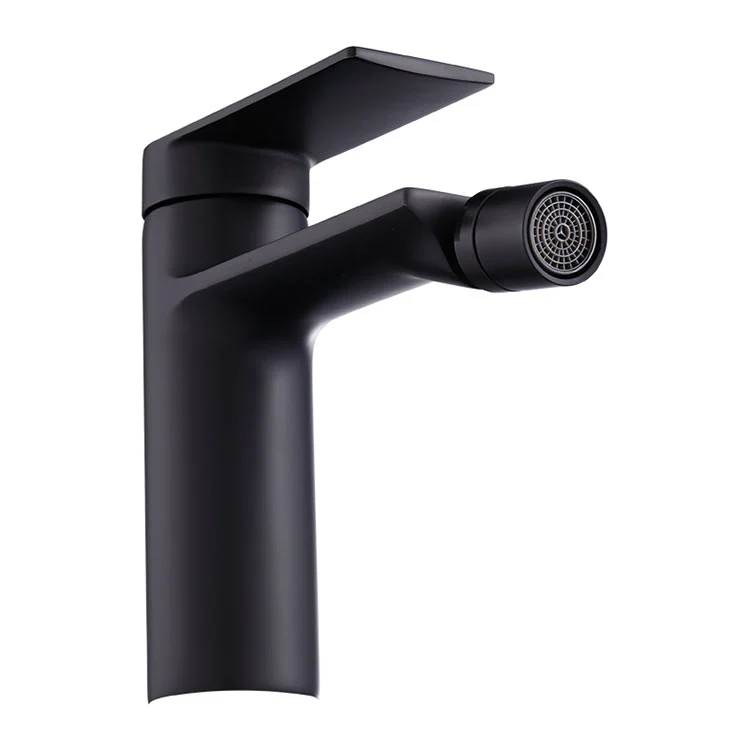
A representative specification table (one of the few in this article) for a typical high-end bidet faucet is shown below, to ground the discussion in concrete detail:
| Parameter | Typical Range / Value | Notes |
|---|---|---|
| Mounting Type | Deck-mounted, wall-mounted, or basin-mounted | Depends on bathroom layout |
| Water Supply | Dual hot + cold, or single cold depending on design | Mixed hot/cold models are more comfortable |
| Flow Rate | 0.5–1.5 GPM (~1.9–5.7 L/min) | Many comply with water-efficient standards |
| Spray Modes | Single stream, oscillating, pulse, aerated | More modes = greater comfort/customization |
| Nozzle Material | Stainless steel, ceramic, or self-cleaning coatings | Anti-limescale and anti-bacterial preferred |
| Finish | Chrome, brushed nickel, matte black, gold | Aesthetic integration with bath decor |
| Control Type | Lever, joystick, push-button, sensor | Ease of use especially when hands are soapy |
| Certification | WRAS, CE, NSF, WaterSense | Quality, safety, water efficiency compliance |
What Exactly Is a Bathroom Bidet Faucet?
-
Definition & Purpose
A bathroom bidet faucet is a fixture dedicated to directing a controlled spray of water for cleansing the genital and perianal area after toileting or for feminine hygiene. Unlike general sink faucets, these devices are optimized for directional jet flow, adjustable pressure, and hygiene considerations. -
Variants & Configurations
Some common types include:-
Deck-mounted bidet faucets — installed on the rim or deck of a bidet bowl or adjacent surface.
-
Wall-mounted bidet faucets — mounted on the wall behind or above the bidet, especially in compact or minimalist designs.
-
Integrated faucet-to-toilet systems — faucet units incorporated into a bidet or toilet structure, enabling a very compact footprint.
-
Electronic/sensor / touchless bidet faucets — employing motion sensors or electronic valves to activate jet flow without manual levers.
-
-
Core Features and Functions
-
Variable water pressure to accommodate gentle or stronger sprays
-
Adjustable spray angle (e.g. ±20° tilt) to align the jet with anatomy
-
Dual hot/cold mixing to deliver comfortable temperature
-
Self-cleaning or anti-limescale nozzles to reduce maintenance
-
Flow restrictors or eco modes to limit water consumption
-
Pause or shut-off controls (lever or push-button)
-
In premium models: sensor activation, auto-flush, or air-dry options
-
This section ensures the reader grasps both the conceptual role and physical forms of bidet faucets before moving to motivations and usage.
Why Choose a Bathroom Bidet Faucet?
Hygiene & Health Benefits
-
Superior cleansing vs. wiping
Water cleansing reaches crevices that paper often misses, reducing residue and minimizing bacterial transfer. Many medical sources endorse bidet use as gentler for sensitive skin, hemorrhoids, or post-surgery care. -
Reduce irritation and protect delicate skin
Especially for people with sensitive skin, eczema, or hemorrhoidal conditions, wiping can cause abrasion. A soft water spray calms irritation. -
Improved independence and accessibility
For elderly or mobility-impaired users, reaching to wipe may be difficult. A bidet faucet allows hands-free or minimal effort cleansing, preserving dignity and independence. -
Reduced cross-contamination risk
By minimizing hand contact with stool or cleaning tissues, bidet faucets help reduce germ transfer and spread.
Environmental & Cost Advantages
-
Lower toilet paper use
Many households report up to a 70–80% reduction in toilet paper consumption after switching to bidet systems. -
Reduced strain on plumbing and septic systems
Less paper flushed means fewer clogs, fewer sewer blockages, and less maintenance for septic tanks. -
Water-use trade-off: bidets vs. paper production
While bidet use consumes a small volume of water, the manufacturing of toilet paper is extremely water-intensive (for example, one roll can cost dozens of gallons in its production). Many analyses find that bidet lifecycle impact is lower. -
Eco-label and regulatory support
WaterSense and local efficiency programs encourage low-flow faucets; bidet faucets often incorporate flow restrictors or efficient mixing to comply.
Market & Trend Drivers
-
Hygiene awareness and pandemic lessons
Global health crises have reinforced public desire for hands-free, more sanitary restroom options. -
Technological integration & smart homes
Touchless faucets, sensor-driven valves, app control, and voice interfaces are emerging in 2025 bathroom trends. -
Minimalist design and mixed-material aesthetics
Faucet finishes combining matte black, brass, or dual-tone surfaces are trendy. Sleek, linear forms dominate 2025 bathroom design. -
Regional adoption growth
Although more mature in Europe and Asia, interest in bidet faucets is growing strongly in the U.S. and North America, especially in upscale and wellness-focused home builds. -
Consumer education and acceptance increasing
As more users share their experience, social media, home improvement publications, and product reviews help normalize bidet faucet use.
How to Choose, Install & Maintain a Bathroom Bidet Faucet
How to Choose the Right Bidet Faucet
A question-based decision framework helps:
-
What’s the mounting style of the bathroom?
If there is a dedicated bidet bowl, a deck- or deck-adjacent mount can work. If space is tight or aesthetic demands are high, wall-mount or integrated models may be more appropriate. -
Do users prefer temperature control?
If yes, select a dual-supply (hot + cold) mixer model. For climates with mild water temperature, a cold-only model may suffice. -
How many spray modes are needed?
Basic single-stream is acceptable, but oscillating, pulse, or aerated spray modes enhance comfort and versatility. -
What nozzle material and cleaning method?
Self-cleaning nozzles or anti-limescale surfaces reduce maintenance. Stainless steel or coated ceramics are preferred. -
Is sensor or touch control desired?
For handsfree operation, choose models with motion sensors or push-button control. -
What is the flow limitation?
Check compliance with local codes or eco programs (e.g. ≤1.5 GPM). -
What finish and design style match the bathroom?
Choose colors and form factors consistent with the rest of the bathroom’s fixtures.
Installation Overview (How to Install)
-
Shut off supply lines — prevent water flow during work.
-
Prepare mounting holes or brackets — depending on deck or wall model.
-
Connect hot & cold (if dual supply) or single cold port, using flexible hoses or rigid connectors.
-
Mount the valve body and fasten securely
-
Attach nozzle/spout assembly and control lever or sensor unit
-
Test for leaks and pressure balance
-
Adjust spray angle/nozzle tilt
-
Flush to remove debris before first use
Professional plumber involvement is recommended, especially for hot/cold mixing models or wall-mounted units.
Maintenance & Troubleshooting (How to Maintain)
-
Regular nozzle cleaning — use mild acid or vinegar cycles to dissolve limescale.
-
Check seals and O-rings annually — replace when worn or leaking.
-
Clear aerators or filters — sediment can reduce performance.
-
Sensor calibration — for touchless models, recalibrate distance or dwell time as needed.
-
Winterization in cold climates — drain and insulate if freezing is a risk.
-
Address pressure imbalance — if spray is weak, inspect supply lines or restrictors.
Two Common Q&A (FAQ) About Bathroom Bidet Faucets
Q1: Will a bidet faucet spray water outside the bidet area and splash my bathroom?
A1: Properly installed bidet faucets are designed with nozzle tilt and pressure control so that the spray is contained within the bidet or toilet bowl. If misalignment or excessive pressure causes overspray, adjusting the spray angle or reducing pressure typically resolves the issue.
Q2: Is a bidet faucet safe to use with a septic system or low-flow plumbing?
A2: Yes. Bidet faucets typically use a modest amount of water per use—far less than the water footprint involved in manufacturing and disposing of toilet paper. In fact, reduced paper use helps ease the load on septic systems. For low-flow plumbing, choose faucets with built-in restrictors or eco modes to comply with codes.
Future Trends, Market Outlook & Brand Positioning
Emerging Trends to Watch
-
Smart and networked control
Future bidet faucets will increasingly support IoT integration, voice control, mobile apps, personalized user profiles, and usage analytics. -
Touchless and sensor refinement
Proximity sensors or capacitive controls that respond to elbows or gestures are expected to become more common. -
Advanced nozzle self-sterilization
Technologies like UV-C LEDs, electrolyzed water, or silver-ion coatings may be embedded to keep nozzles bacteria-free. -
Modular upgradeability
Faucet systems allowing incremental upgrades (e.g. adding heating or drying modules later) will gain traction. -
Sustainability certifications
Stricter water efficiency regulations and eco-labels will push manufacturers to further reduce water usage while maintaining performance. -
Global mainstream acceptance
As cultural barriers fade, bidet faucets may move toward becoming a standard in premium bathrooms across developed markets.
Positioning & Brand Integration
In this evolving landscape, a quality brand can differentiate via durable materials, intelligent features, aesthetic harmony, and strong after-sales support. KINGSDOM positions itself as a forward-thinking brand that blends hygiene, design, and technology. Its bathroom bidet faucet line integrates adjustable spray modes, durable nozzle materials, eco-efficient flow control, and optional touchless operation to meet modern demands.
When choosing a partner for bidet fixtures, KINGSDOM stands out for its commitment to product robustness, user-centric innovation, and alignment with both current and future bathroom trends.
For further information, specifications, or to discuss customized product options, CONTACT US.