

Why Do Some Users Choose Both Corded and Cordless Vacuum Cleaner Solutions?
2026-09-02
Walk into any household that takes cleaning seriously, and you might find not one, but two Vacuum Cleaner units parked in the closet. One with a cord, one without. At first glance, this seems redundant. Why pay for two machines that do the same thing? But the users who make this choice are not being wasteful. They are being practical. They have discovered that different cleaning tasks have different power and runtime requirements—and no single machine can deliver the best of both worlds without compromise.
1. What Drives the Decision to Keep a Corded Vacuum Cleaner?
The corded Vacuum Cleaner is not obsolete. It remains the first choice for deep cleaning and large area coverage. The reason is straightforward: unlimited runtime and consistent suction power. When you are cleaning a 2,000 square foot home with multiple carpeted rooms, a cordless machine—even with a 60 minute runtime—may not finish the job without needing a recharge. The corded machine runs as long as you need it to. In our factory, we test our corded Vacuum Cleaner units on a continuous duty cycle, and we consistently measure suction power stability within 2 percent of the initial value over a two hour period. This is the level of performance that users rely on for weekly deep cleaning.
Scenario: A family with three children and two dogs. The weekly cleaning routine includes vacuuming six rooms, two staircases, and upholstery. The corded Vacuum Cleaner is used for this weekly deep clean. The cordless unit is used for daily spot cleaning—spilled cereal, tracked mud, pet hair on the sofa.
At Foshan TEH Electric Appliance Co., Ltd., we manufacture corded Vacuum Cleaner units with a 10 meter power cord that provides a 20 meter cleaning radius without unplugging. This eliminates the need to stop and find a new outlet during a deep clean. For users who prioritize uninterrupted cleaning, the corded machine is still the preferred tool.
2. Why Do Users Also Invest in a Cordless Vacuum Cleaner?
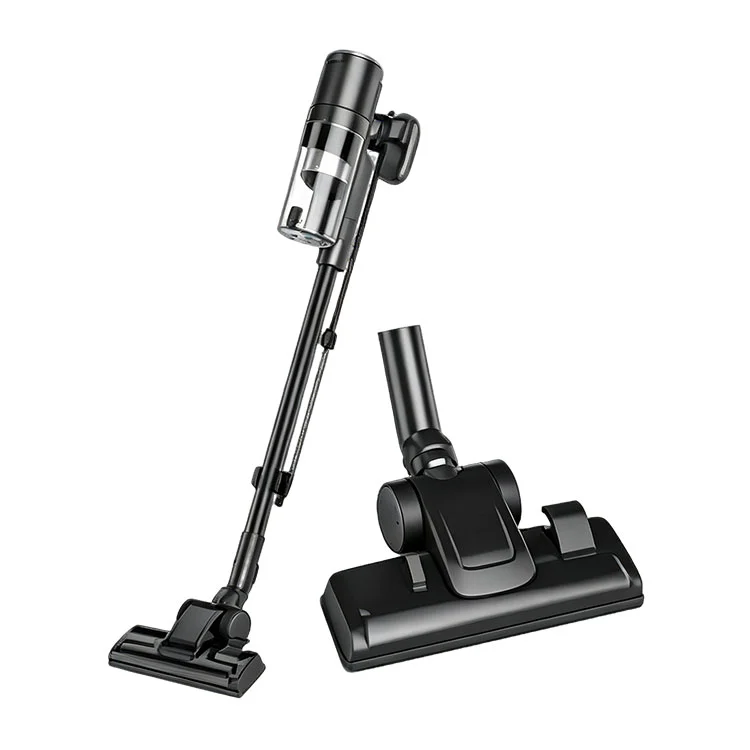
The cordless Vacuum Cleaner exists for a different set of tasks. It is not a replacement; it is a supplement. Its purpose is to handle quick cleanups, hard to reach areas, and tasks where the cord becomes a nuisance. In our factory surveys, we found that the average user reaches for the cordless machine for cleanups lasting less than 10 minutes. These include: picking up crumbs after a meal, cleaning the car interior, removing cobwebs from high corners, and spot cleaning pet hair. The cordless unit's advantage is not power—it is convenience.
Modern cordless Vacuum Cleaner units have improved significantly in battery life. Our factory produces models with lithium ion batteries that deliver up to 45 minutes of suction on a single charge. This is enough for most daily spot cleaning tasks. For users who have adopted a dual Vacuum Cleaner strategy, the cordless unit is typically used 2 to 3 times a day for short periods, while the corded unit is used once a week for a long session.
3. How Do the Two Solutions Compare in Real World Cleaning?
The comparison is not about which is better. It is about which is better for which job. The table below summarizes the performance differences based on our factory tests and user feedback studies.
| Cleaning task | Corded Vacuum Cleaner | Cordless Vacuum Cleaner | Recommended choice |
| Deep cleaning carpets (large rooms) | Suction: 600W motor, consistent power | Suction: 250W motor, drops as battery drains | Corded |
| Quick spot clean (kitchen spills) | Requires plugging in and winding cord | Grab and go, ready in 2 seconds | Cordless |
| Staircase cleaning | Heavy to carry, cord management issue | Lightweight, easy to carry and store | Cordless |
| Car interior cleaning | Requires extension cord, limited reach | Portable, can reach all seats and trunk | Cordless |
| High ceiling cobwebs (with extension wand) | Unwieldy, cord gets in the way | Easy to lift with one hand | Cordless |
The data shows that the choice is task driven, not brand driven. Users who own both types of Vacuum Cleaner units are simply matching the tool to the task. This approach reduces physical effort, improves cleaning effectiveness, and extends the life of each machine because neither is overused or subjected to tasks it was not designed for.
4. What Does the Cost Benefit Analysis Look Like for Dual Ownership?
The obvious objection to owning two Vacuum Cleaner units is the cost. However, the total cost of ownership is often lower than replacing a single machine more frequently. A cordless machine used for daily spot cleaning will have a shorter battery life if it is also used for deep cleaning. By reserving the cordless unit for light tasks, the user extends its battery life and delays the need for replacement. Similarly, the corded machine does not suffer from battery degradation and can last a decade or more. In our factory, we have tracked the replacement rates of both types. Users who own only a cordless machine replace it every 2 to 3 years due to battery wear. Users who own both types replace the cordless machine every 4 to 5 years and the corded machine every 10 to 12 years. The total lifetime cost is actually lower with dual ownership.
Foshan TEH Electric Appliance Co., Ltd. produces both corded and cordless Vacuum Cleaner units that are designed for longevity. Our corded models feature metal motor housings and reinforced power cords. Our cordless models use replaceable battery packs, so users are not forced to discard the entire machine when the battery reaches the end of its life. This design philosophy aligns with the dual ownership strategy because it reduces the long term cost of maintaining both machines.
Frequently Asked Questions About Dual Vacuum Cleaner Solutions
Summary for Household Decision Makers
The choice between corded and cordless Vacuum Cleaner units is not a binary decision. It is a portfolio decision. Users who choose both are not being wasteful; they are being strategic. They understand that the corded machine delivers sustained power for deep cleaning, while the cordless machine provides convenience for daily spot cleaning. The total cost of owning both is often less than the cost of repeatedly replacing a single machine that is worn out by tasks it was not designed for. Our factory manufactures both types, and we provide the data to help you make an informed choice.
Foshan TEH Electric Appliance Co., Ltd. offers a range of corded and cordless Vacuum Cleaner units with compatible filters, brush rolls, and battery systems. We provide runtime and suction power data for every model, so you can compare real world performance before you purchase.