

Why Is the Basin Faucet the Most Frequently Used Fixture in Any Bathroom?
2026-09-02
Think about your morning routine. How many times do you touch the bathroom sink faucet compared to the shower handle or the toilet flush? The shower is used once or twice a day. The toilet is flushed maybe half a dozen times. But the basin faucet? Hands are washed after every bathroom visit, before every meal, after handling raw food, and countless other times throughout the day. For a family of four, the basin faucet can be turned on and off 20 to 30 times per day. That is over 7,000 cycles per year. This makes it the single most interacted with fixture in any bathroom, and the one most likely to wear out over time.
1. What Does "Most Frequently Used" Actually Mean in Terms of Wear?
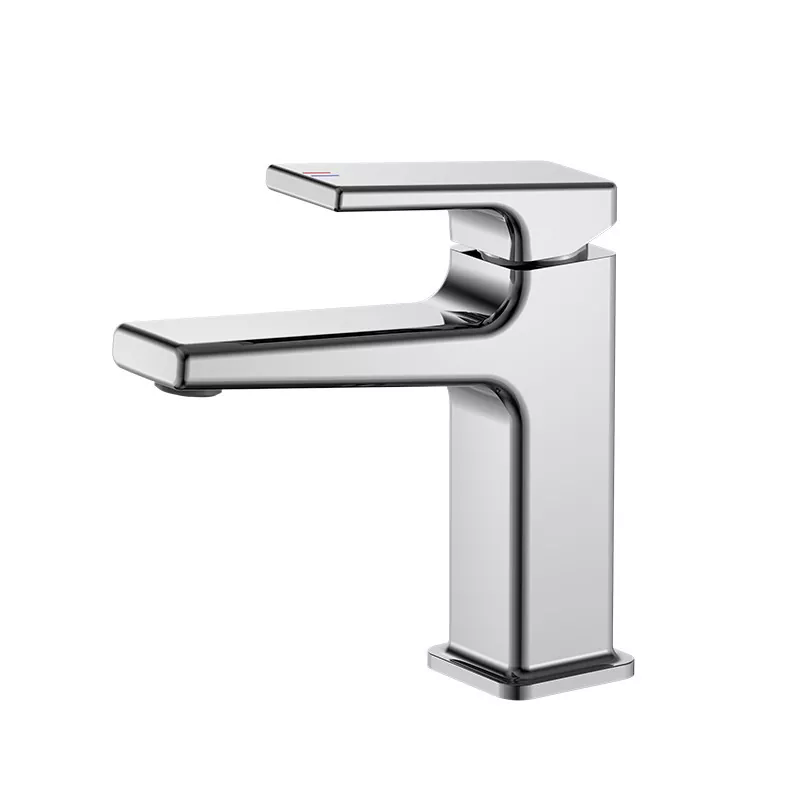
When we say a Basin Faucet is the most frequently used fixture, we are not just talking about how many times it is turned on. We are talking about the cumulative mechanical stress on the internal cartridge, the wear on the sealing surfaces, and the exposure to mineral deposits from daily water contact. A typical bathroom Basin Faucet handles about 150 to 200 liters of water per day for a household of four. That is over 50,000 liters per year. Every liter passes through the cartridge, carrying dissolved minerals that gradually deposit on the ceramic discs. Over time, these deposits can cause the handle to become stiff, the water to drip, or the temperature adjustment to become less precise. In our factory, we have tested Basin Faucet units under accelerated wear conditions that simulate 10 years of daily use. The most common failure point is not the external finish, but the internal cartridge. This is why the quality of the cartridge is the single most important factor in the longevity of any Basin Faucet.
Daily use estimate for a family of four:
• Morning routine (brushing teeth, face washing): 8 to 12 operations
• After each meal: 6 to 8 operations
• After bathroom visits: 12 to 16 operations
• Cooking and food prep: 4 to 6 operations
Total daily operations: 30 to 42 — that is over 10,000 operations per year.
At Wenzhou Huabaoyuan Sanitary Ware Co., Ltd., we manufacture Basin Faucet units with ceramic cartridges that are rated for 500,000 to 1,000,000 cycles. This means that under normal residential use, our faucets are designed to last 50 to 100 years. However, the actual lifespan depends on water quality and maintenance. Hard water areas will shorten the life of the cartridge. We recommend a simple maintenance routine: remove the aerator and soak it in vinegar every six months to remove mineral deposits.
2. What Are the Different Cartridge Types and How Do They Affect Daily Use?
Not all Basin Faucet cartridges are created equal. The two most common types are compression cartridges (often found in older, two-handle faucets) and ceramic disc cartridges (standard in modern single-lever faucets). Compression cartridges use rubber washers that compress against a valve seat to stop water flow. Over time, the rubber hardens and deforms, leading to drips and the need for washer replacement. Ceramic disc cartridges use two polished discs that slide against each other. They are much more wear resistant and require virtually no maintenance. The table below compares the two types based on durability, maintenance, and user experience.
| Feature | Ceramic disc cartridge | Compression cartridge (rubber washer) |
| Typical lifespan (cycles) | 500,000 to 1,000,000 | 50,000 to 100,000 |
| Maintenance required | Virtually none | Replace washer every 2 to 4 years |
| Handle feel | Smooth, precise, consistent | Stiffens over time, requires force |
| Flow control precision | Excellent (fine adjustments possible) | Moderate (difficult to set exact flow) |
| Drip resistance | High (ceramic discs are self lapping) | Moderate (washers deform over time) |
All Basin Faucet units from our factory use ceramic disc cartridges. The ceramic discs are made from 99.5 percent pure alumina, which is polished to a surface finish of 0.1 Ra. This ensures a near perfect seal and a smooth handle operation that remains consistent for the life of the faucet. In our factory, we test every cartridge for leak tightness at 1.2 MPa water pressure.
3. What Design Features Affect the Daily User Experience?
The frequency of use means that the user experience matters more than with any other bathroom fixture. A Basin Faucet with a poorly positioned handle, a sharp spout, or a splashing aerator will become a daily annoyance. The three design features that most affect daily comfort are the handle reach, the spout height, and the aerator flow pattern. The handle should be within easy reach without requiring the user to lean forward. The spout height should allow hand washing without the fingers hitting the back of the basin. The aerator should produce a soft, non splashing stream. The table below shows the recommended dimensions for a comfortable user experience, based on ergonomic studies and our factory's design guidelines.
| Design parameter | Recommended range | Why it matters |
| Handle reach (from rear edge of basin) | 80 to 120 mm | Must be easily accessible without stretching |
| Spout height (above basin rim) | 90 to 150 mm | Allows hand insertion without hitting basin |
| Spout reach (center to center) | 100 to 150 mm | Ensures water stream falls into drain center |
| Flow rate (at 0.3 MPa water pressure) | 5 to 8 liters per minute | Sufficient for washing, not excessive |
| Handle rotation angle (cold to hot) | 80 to 100 degrees | Fine temperature adjustment without overshoot |
SINKY Faucets designs Basin Faucet units with these ergonomic parameters in mind. Our single-lever models have a handle arc of 90 degrees, which provides a good balance between temperature precision and ease of use. The aerator is a water-saving model that mixes air into the stream, producing a soft, splash free flow while reducing water consumption by 30 percent compared to standard aerators.
4. How Does Finish Quality Affect Longevity in a High-Use Fixture?
The daily handling of a Basin Faucet means that the finish is subjected to constant contact with moisture, soaps, and human oils. A poor quality finish will show wear within months, with visible fading, pitting, or tarnishing. The most durable finishes are chrome (electroplated), brushed nickel, and PVD coated finishes. In our factory, we use a multi-layer electroplating process for chrome finishes: a copper base layer, a nickel intermediate layer, and a chrome top layer. The total plating thickness is 0.25 to 0.35 microns. This provides excellent corrosion resistance and a high gloss surface that is easy to clean. For brushed finishes, we use a PVD (physical vapor deposition) coating that is even more durable than traditional plating. The PVD coating penetrates the metal surface, making it highly resistant to scratching and tarnishing.
In our experience, the finish is the first thing a homeowner notices when a faucet shows signs of wear. A Basin Faucet with a tarnished finish will make the entire bathroom look dated, even if the internal components are still in good condition. This is why we recommend spending a little more on a high quality finish that will maintain its appearance for decades. Our factory offers a 10 year guarantee on the finish of all our Basin Faucet products.
Frequently Asked Questions About Basin Faucet Selection and Care
Summary for Homeowners and Property Managers
The Basin Faucet is the most frequently used fixture in any bathroom because it is touched by every member of the household, multiple times a day, for a variety of tasks. Its daily use means that the quality of the cartridge, the finish, and the design directly affect the daily experience of every person in the home. Investing in a well-made Basin Faucet is not just about aesthetics—it is about ensuring reliability, reducing maintenance, and saving water over the long term. Our factory has been manufacturing Basin Faucet products for over 15 years, with a focus on durable cartridges and corrosion resistant finishes.
Wenzhou Huabaoyuan Sanitary Ware Co., Ltd. produces Basin Faucet units that are designed for high frequency use. We use only ceramic disc cartridges, multi-layer plating, and water-saving aerators. Each faucet is tested for leak tightness and flow rate before packaging. We provide full documentation, including installation instructions and warranty information.